

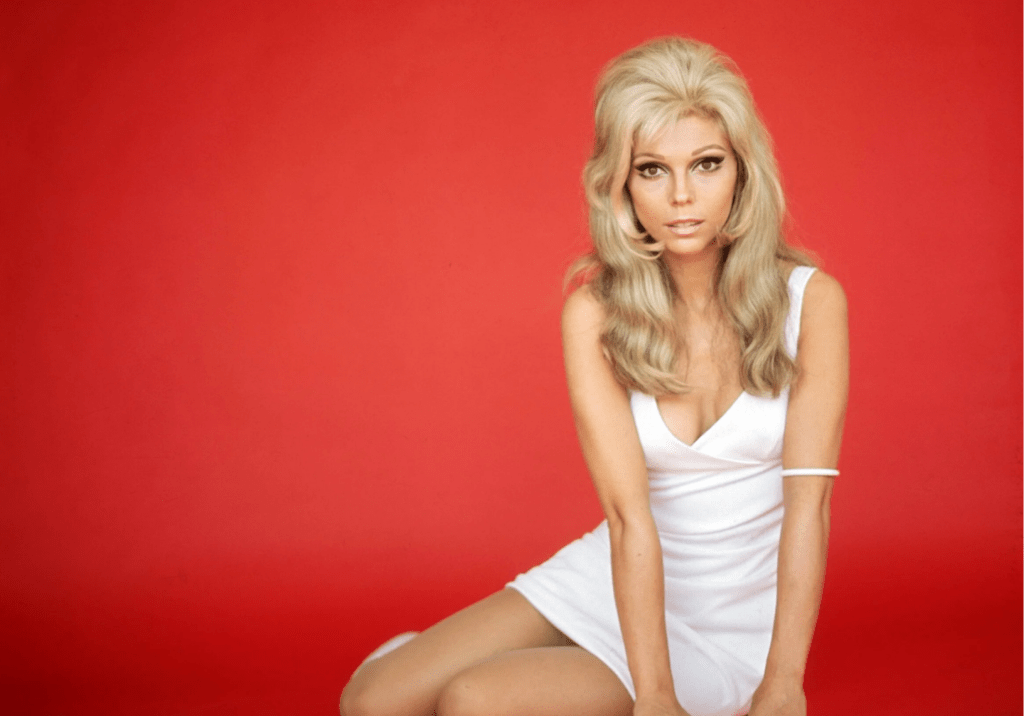
Image Credit: Ron Joy
Born in 1940, Nancy Sinatra began her singing career in 1957 and is now widely known for being one of the top female singers that defined the ‘Swinging Sixties’. With smooth vocals and chic fashion she stood as the embodiment of sixties style, initially landing success in Italy, likely due to her Italian-American heritage. Sinatra’s discography consists of thirteen solo albums and five collaborative albums featuring long-time singing partner Lee Hazlewood, father Frank Sinatra, and American country singer Mel Tillis. Her cover of Cher’s ‘Bang Bang (My Baby Shot Me Down)’ would go on to open Quentin Tarantino’s Kill Bill (2003), and her performance of the titular theme song for 1967 Bond film You Only Live Twice. This would cement her as not only a chart-topping singer, but one who could adapt to the world of cinema.
In 1965, a song that shook the music industry – ‘These Boots Are Made For Walkin’’ shot straight to No.1 in the Billboard Hot 100, just over a month after its release. Featured in her titular album Boots, released in the same year, this song became the one Sinatra would become most renowned for. Written by singer-songwriter and producer Lee Hazlewood, who Sinatra worked closely with into the 70s, ‘These Boots Are Made For Walkin’ was originally written to be sung by Hazlewood himself. Hazlewood didn’t intend the song to be sung by Nancy as he claimed “it’s not really a girl’s song”. This was revealed in an interview with Nancy Sinatra going on to say that she had to convince Hazlewood to let her sing the song because it came off “harsh and abusive” for a man to sing.
Re-reading the lyrics from a man’s perspective does admittedly shift the tone of the song completely – it no longer sounds like a feminist anthem but an ugly display of hyper-masculinity. Coming off the back of the 1950s, a decade in which women were subordinated to the role of housewife and expected to be obedient, this defiant song being sung by a woman indicates a turning point. Sinatra being so outspoken and forward-thinking in her vision for the song only adds to her empowering delivery.
The music video stars go-go dancers alongside Sinatra all wearing their iconic boots, a shoe that ruled youth fashion of the ‘Swinging Sixties’ and marked a shift from the previous decade. Sixties colours were brighter, bolder, and these boots signalled a modernity that inspired young women and the way they expressed themselves through fashion. Looking deeper, alongside sporting this era-defining and symbolic shoe, Sinatra reframed the song from a woman’s perspective when she finds out her lover has been unfaithful, and what she plans to do to get her satisfying revenge.
The song ends with Sinatra singing – “Are you ready boots? Start walkin’” – indicating how women were marching towards a more modern, experimental and liberating era. In recent years it has been played during the Women’s March, a world-wide protest in demand for the protection of women’s rights.
However, since her success really took off in the 60s, Sinatra has been heavily associated with her father to the point of the media minimising her own talent. She is rarely referred to outside of him, and despite the two having a close bond in and outside of the music world, she has expressed concerns with being known as solely “Frank Sinatra’s daughter” or the woman who sang Boots.
By the late 60s, Nancy was fed up with making “bubblegum” music. She had received much criticism on her vocal capabilities and allegedly surface-level performances, undermining her career as a singer. In an interview with Clash magazine, she stated that her music with Lee Hazlewood, darker and more psychedelic than her previous songs, more accurately reflected the America she was observing. With the ongoing Vietnam War, the future seemed bleak. Bubblegum pop no longer resonated or felt suitable for society at the time, and Nancy felt this deeply.
Alongside her signature song, Nancy Sinatra received wide success with songs ‘Summer Wine’, ‘Bang Bang (My Baby Shot Me Down)’, and ‘Somethin’ Stupid’, a duet with her father released in 1967 that reached number one in both the UK and US. From film soundtracks to influencing artists such as Sonic Youth, Morrissey, and Lana Del Rey, Sinatra’s timeless repertoire continues to be streamed across the globe. As well as her hit song being played during protests, Nancy Sinatra has also been consistently vocal about her thoughts on US president Donald Trump. In an interview with the Guardian she stated: “I’ll never forgive the people that voted for him, ever. I have an angry place inside of me now”.
As a women’s rights advocate and self-proclaimed feminist, Sinatra has been active on X (formerly Twitter) consistently calling-out Trump for his restrictive legislations surrounding women’s bodily autonomy as well as his regressive stance on climate change. She has shown support for Margaret Mead, American anthropologist and women’s rights advocate, as well as having expressed support for the Black Lives Matter movement in a 2021 interview with Rolling Stone Magazine, a year after the powerful demonstration that incited people all over the world to protest against systemic racism.
With Trump continuing to divide the nation, Nancy Sinatra states that – “I hope we can get back to the freedoms we enjoy. I worry. I don’t want my granddaughters to grow up in a nation full of hate.” This sentiment is one that both holds relevance in the turbulent 60s and 70s and continues to in today’s America, a country which is being walked all over by those in power.

Leave a comment