

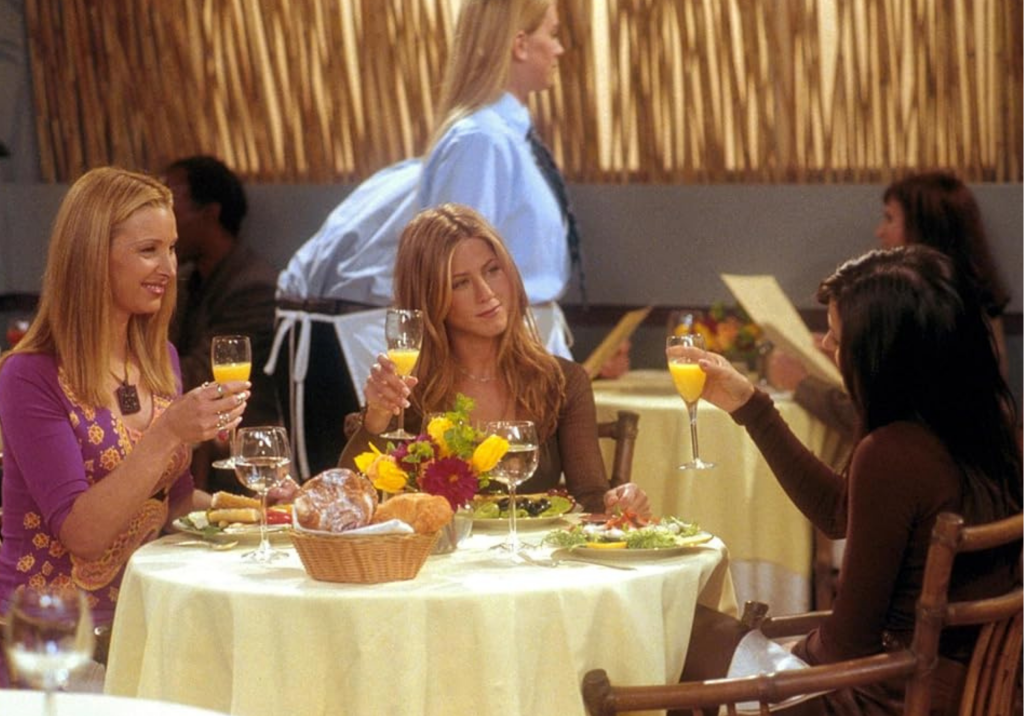
Image Credit: Friends. ‘The One With The Nap Partners.’ (Season 7, Episode 6)
Fictional Friendships
Chandler and Joey. Han Solo and Luke Skywalker. Frodo and Sam. Harry Potter and Ron Weasley. If anyone were to ask you to name some of TV and film’s most iconic friendships these ‘bromances’ are likely the first that would come to mind. Whilst it is undoubtedly important to appreciate these examples of healthy and platonic male love, it is equally imperative to uplift and spotlight some of the amazing female friendships that have graced our screens in recent decades.
The Bechdel Test

The Bechdel Test
Image Credit: Coyote PR
Examples of positive on-screen female friendships are unfortunately rather hard to pinpoint. Many major franchises and shows – including the likes of the MCU (Marvel Cinematic Universe, 2008-present), Lord of The Rings (2001-2003) and Game of Thrones (2011-2019) – marginally or even outright fail the ‘Bechdel Test’. If you’re unfamiliar with this concept, the Bechdel Test is a measure of positive female representation on screen, coined by the cartoonist Alison Bechdel. A film/show only passes the test if it features two or more female characters (who must be named) having a conversation about something other than men. Although the Bechdel Test is not a definitive marker of how well female characters are portrayed, pieces of media that fail it tend to consign women’s roles to sidekicks or romantic counterparts for men and do not convey any sense of female solidarity.
Even if a film does pass the test – such as Mean Girls (2004) and White Chicks (2004) – it can fall victim to misogynistic stereotypes surrounding female friendships. These chick-flicks characterise female friendship as messy, unstable, and rooted in deep feelings of jealousy and resentment. Much of the pettiness, bitchiness, and backstabbing that occur in these films are a result of competition over men; the growing divide between Cady and Regina in Mean Girls is caused by their rivalry over Aaron Samuels, for example. So, even if a film primarily focuses on female interaction, these interactions are often shaped by anti-feminist discourse and androcentric structures.
Decentering Men
The concept of ‘decentering men’ is a hot topic on social media at the moment. It has long been an integral practice for feminists, but platforms like TikTok have pushed this idea into the mainstream. It involves shifting one’s focus away from men, choosing instead to prioritise self-care, self-empowerment, and solidarity with other women. By actively choosing to decenter men from their lives, many women have found their female friendships to be just as meaningful and fulfilling as any romantic connection with a man.
Wanting to explore these concepts in more detail, I’ve decided to start a series of articles for Gurlish in which I will analyse TV and film’s most iconic female friendships. In my exploration of these female bonds, I will consider how positively they are represented, and the extent to which they successfully ‘decentre men.’ This will be determined through my final and personal verdict of ‘amazing’, ‘good’, ‘mediocre’ or ‘poor’ representation.
So how do Monica, Rachel & Phoebe fare?
It seems only fitting to start with the ultimate series about friendships (and the show that popularised the term ‘BFF’) : the beloved sitcom Friends, focusing specifically on Monica, Phoebe and Rachel.
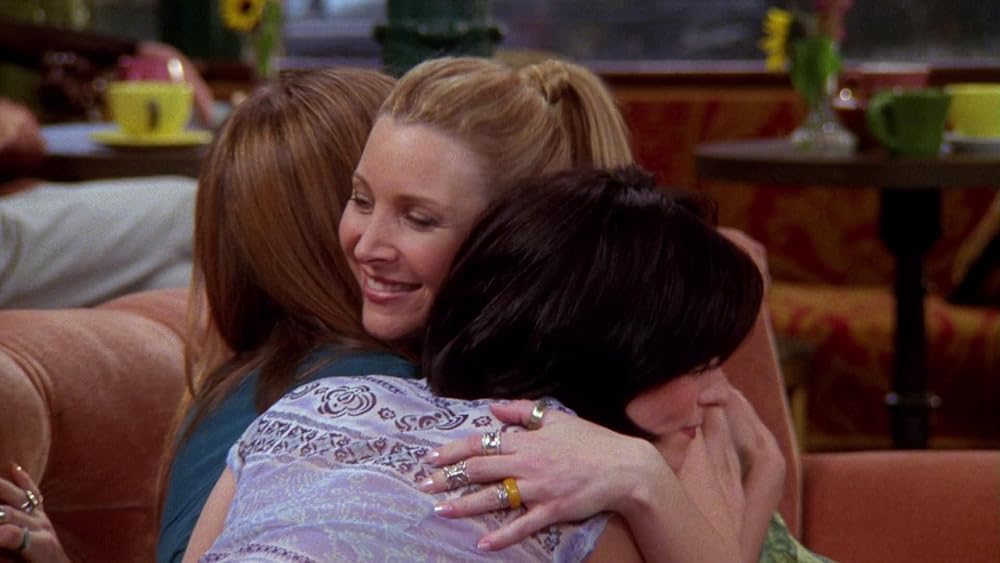
Image Credit: Friends. ‘The One With The Worst Best Man Ever’. (Season 4, Episode 22)
Set in 1990s NYC, Friends features six twenty-somethings – Rachel, Monica, Phoebe, Joey, Ross and Chandler – navigating love, friendships and career in The Big Apple. Whilst Joey and Chandler’s ‘bromance’ is a predominant topic of discussion for fans, the trio of Monica (Courteney Cox), Rachel (Jennifer Aniston) and Phoebe (Lisa Kudrow) is my personal favourite friendship dynamic in the series.
The series begins with Rachel, initially portrayed as a superficial, wealthy and spoiled runaway bride, reuniting with Monica. They were high school besties who lost contact, but the years they spent apart seemingly do little to harm their strong bond. They quickly rekindle their friendship, with Monica allowing Rachel to move into her apartment. She shows Rachel a new lease of life; she teaches her how to fend for herself without her father’s money and introduces her to a whole new group of friends (including Phoebe, Monica’s eccentric prior roommate). Whilst the three women initially have little in common, their friendship as a trio is fully cemented in Season 1, Episode 4 ‘The One With George Stephanopoulos’. The three women have a sleepover, discussing careers, future plans, their respective pasts, and crushes. After bingeing the series way too many times, I’ve noticed that men are a focal topic of their conversations. Monica often talks about Richard or Chandler (her two main love interests in the series), Rachel frequently discusses her on-again off-again relationship with Ross, and Phoebe usually has a new love interest every few episodes.
However, there are several plotlines that utilise these characters (in various combinations) that have nothing to do with men whatsoever. These women often talk about their career plans, having children, fashion, culture etc. Whilst they all have romantic and domestic aspirations to an extent, they have other ambitions that make their character arcs more fulfilling: Phoebe’s being her music, and Monica & Rachel’s being their respective careers in catering and fashion. Conveying these goals – as well as these women’s joint efforts and support to achieve them – make up a significant portion of their collective screentime.
Considering their friendship group also consists of three men, much of their dialogue and scenes inevitably revolve around Ross, Chandler and Joey in some way. Interestingly, there are several iconic plotlines in which the women team up in some way to get revenge on, make fun of, or go head to head with these men. Episodes such as – ‘The One With All The Poker’ (Season 1, Episode 18) in which the girls and boys fiercely compete in a card tournament, ‘The One With The Embryo’ (Season 4, Episode 12) where Monica and Rachel contend with Chandler and Joey in a battle for their apartment, and finally ‘The One With Unagi’ (Season 6, Episode 17) when Rachel and Phoebe work together to prove Ross’ idiotic self-defence theory of ‘unagi’ is utter nonsense – are all great examples of this. Evidently, there are numerous displays of female solidarity in Friends, even if these are defined within the comedic constraints of a sitcom.
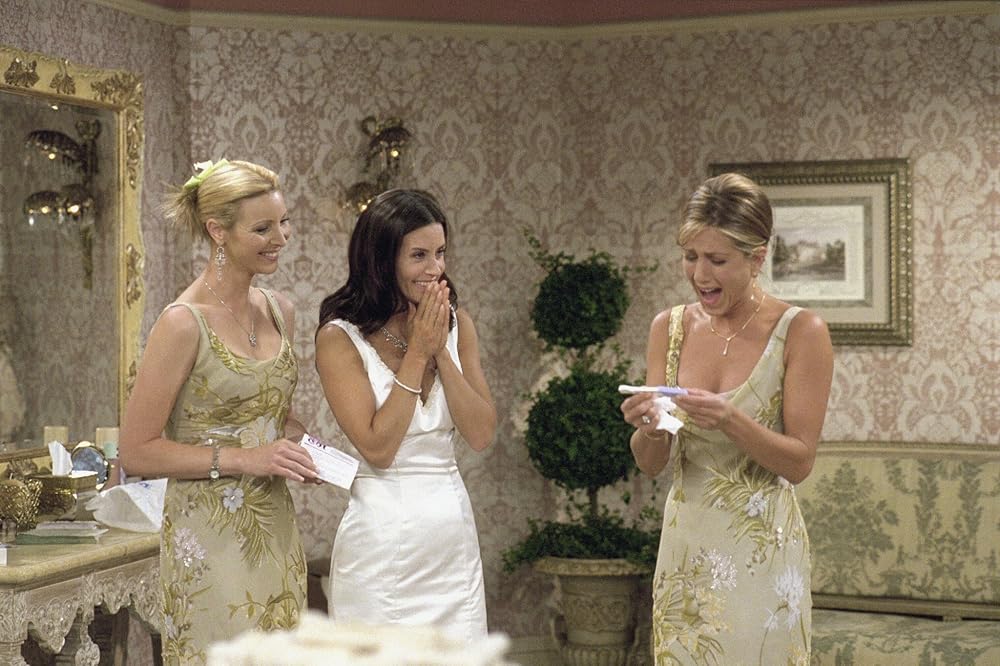
Image Credit: Friends. ‘The One After I Do’ (Season 8, Episode 1)
In many cases, any sort of divide between these women does not revolve around men. Take, for example, ‘The One With The Nap Partners’ (Season 7, Episode 6), in which Phoebe and Rachel battle it out to become Monica’s maid of honour. Or, in ‘The One With The Dollhouse’ (Season 3, Episode 20), where Monica and Phoebe comedically compete to see who has the most fun dollhouse. While Monica and Rachel have their fair share of spats surrounding Ross, their major arguments – such as their fight when Rachel moves out of Monica’s apartment (‘The One On The Last Night’ – Season 6 Episode, 6) – are rooted in their fears of losing their close bond. Monica, Rachel, and Phoebe all bicker like sisters, but will always find a way back to each other no matter what. The fact that Courteney Cox, Jennifer Aniston, and Lisa Kudrow are so close in real life makes this on-screen friendship group all the more special to watch.
My verdict: ‘Good’ representation




Leave a comment