

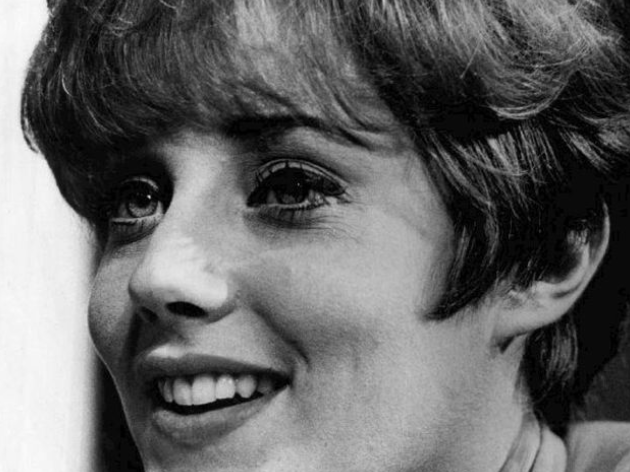
Image Credit: Wikipedia Commons
As a lifelong lover of all things music and a true fangirl through and through, Lesley Gore’s story is particularly special to me. Furthermore, as a member of the LGBTQ+ community, Lesley’s identity and activism are especially representative and admirable to me, as she continues to inspire many within queer cultural history, feminist discourse, and beyond – proving her to be much more than a pop sensation.
Ten years following her passing, Gore’s legacy lives on. The ‘It’s My Party’ and ‘You Don’t Own Me’ singer contributed heavily to the representation of queer women in the music industry, not only with her open and truthful presence since before her official coming out as a lesbian in 2005, but also with her lyricism and personal activism. She was a pioneering voice in advocating for women’s autonomy and LGBTQ+ visibility during an era when both were still taboo topics. She laid clear foundations for the empowered generations to come.
Born in 1946 in Brooklyn, New York, it was evident that music was the calling for Lesley Sue Goldstein. Lesley was only 16 years old when she was discovered by legendary producer Quincy Jones, going on to write her number-one-charting hit ‘It’s My Party.’ The hard-hitting, emotional lyrics linger on to this day, forming an anthem of adolescence and ownership for many. The song launched Gore into instant stardom, as her follow-up single, ‘Judy’s Turn to Cry,’ was already in the works. It is, however, further important to note that Lesley’s family dropped their traditionally Jewish-sounding last name, Goldstein, shortly after Lesley’s birth, in fears of growing anti-semitism at the time.
Her 1963 single, ‘You Don’t Own Me,’ released when Lesley was only 17 years old, is a powerful tribute to rejecting women’s passive femininity, and with its motivating lyrics, Gore displayed similar messages in her songs throughout her musical career. Despite the criticisms she faced at the time she persevered, and later, the song became a staple in advocating for the #MeToo movement and reproductive rights in recent years. With lyrics such as “Don’t tell me what to do / And don’t tell me what to say,” Lesley Gore voiced a message of empowerment that resonates to this day. Lesley herself has stated that she considered ‘You Don’t Own Me’ her signature song, representing what she stands for the most accurately.
The legacy of Lesley Gore influenced generations with her ground-breaking and emotional lyrics, and in 2015, the lyrics of ‘It’s My Party’ were later sampled by the pop singer Melanie Martinez. Furthermore, ‘You Don’t Own Me’ was sampled in 2015 by Australian singer Saygrace, which featured G-Eazy. Even more interestingly, the producer Quincy Jones, who produced the original 1963 song, was also featured as a producer in the Australian sample – maintaining the song’s original style over 50 years after its original recording.
A true LGBTQ+ icon, Gore hosted a PBS show called In the Life in 2004, which sought to shine light on LGBTQ+ issues at the time. She later came out as a lesbian in a 2005 interview with AfterEllen, sharing that she had been in a long-term 20-year-long relationship with her life partner Lois Sasson. Despite acknowledging that during her life she never felt that she had to hide her sexuality, she noted that this was not the same for all members of the community. “I just kind of lived my life naturally and did what I wanted to do,” she once proclaimed.
Working as an actress later in her life, she composed songs for the 1980 film Fame along with her brother, contributing to its Academy Award-winning soundtrack. She also made occasional acting cameos, such as a role as Catwoman’s sidekick, Pussycat, in the Batman TV series in 1967. This versatility proves her to be an excellent pop culture all-rounder and a true star throughout several types of media. And she did this exceptionally well – turning charts and production sets into her catwalk.
Her presence is contextually significant as Gore entered the music industry at a time when men dominated in theory and practice, and as a young, queer, Jewish woman from a working-class background, her work provided representation for many, and her activism conveyed the importance of using your platform to speak out about societal issues.
The importance of role models such as Lesley Gore, who always persisted in being unapologetically herself regardless of societal expectations, norms, and struggles, continues to be of notable importance today. It is people like Lesley who have subsequently allowed like-minded individuals with similar identities to thrive at a similar time.While Gore is most known for her musical hits, with many of them reaching the top five on America’s national music charts, she continues to be a role model and an aspiration to many, both within the music industry and outside of it. With her legacy, Lesley Gore truly paved the way for future artists in the music industry, and she will undoubtedly continue to do the same in the upcoming years.


Leave a comment