


Image Credit: Gilmore Girls
I have kept a self-reflective journal for as long as I can remember. Under my bed there lie dozens of notebooks filled to the brim with sprawling notes, doodles, and lists, some of which were penned as many as ten years ago. As a child, writing was simply a habit, informed by nothing but my own free will and access to pen and paper. To my journal, I would speak about anything and everything, from the good to the bad, the mundane to the magical. In reality, this hasn’t really changed over the years; I write about the same old things from the same old mind, but I like to think that at 20 years old I am more aware – and therefore more appreciative – of the wonders my journal does for me. So, if I have gained any wisdom regarding this topic, I hope to impart it today.
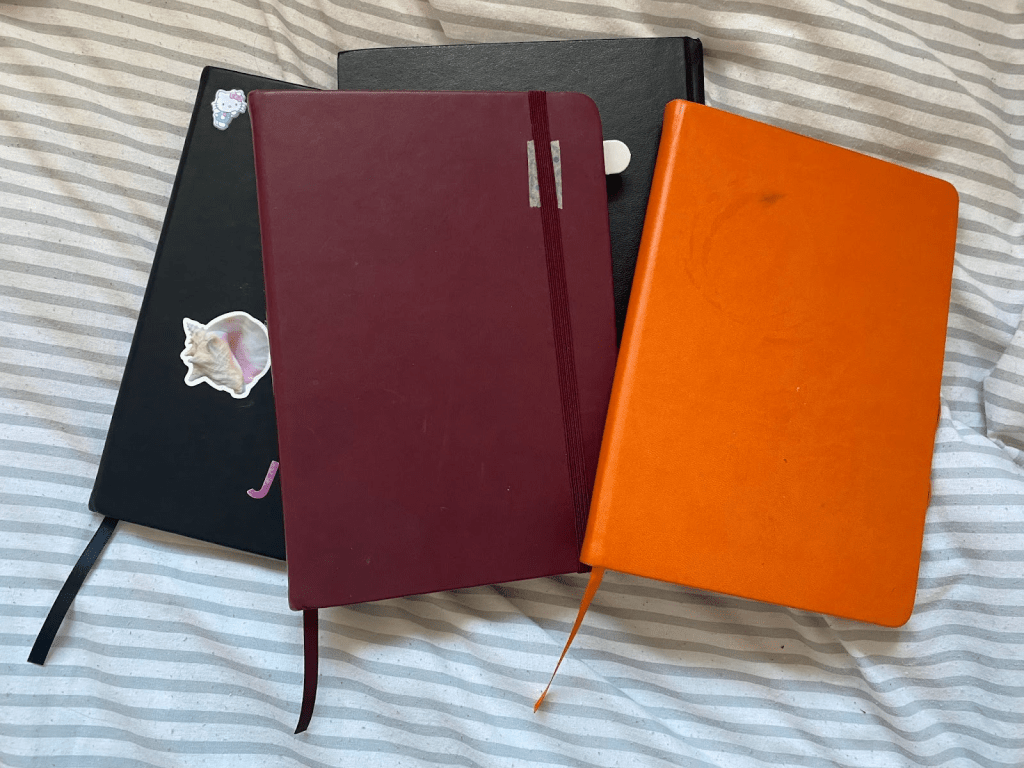
Just a few of my past journals
To borrow from Patti Smith, because no one does it better: “Writing is what I do.” Every day without fail, I find the time to sit down and write. Unlike Smith, who frequents a local cafe and writes alongside her morning coffee, I have no designated time or place at which I journal. Despite its amorphous shape my process remains a ritual, although the lack of specificity means I am never far from a notebook. And this is my first piece of advice: take your journal everywhere. Do not leave the house without it. On the few occasions I have neglected mine, I have genuinely regretted it. Cliche but true, inspiration often strikes when you least expect it.
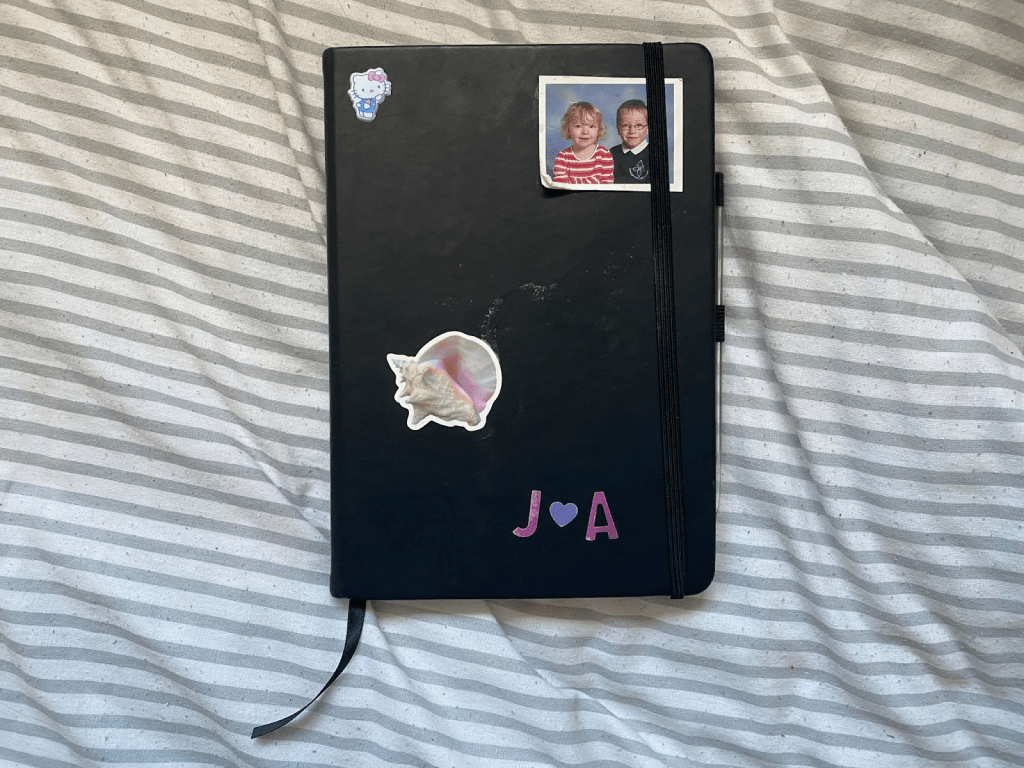
My current journal, a permanent resident of my handbag
This concept, inspiration, is a tricky one to define when it comes to journaling. Because a journal is so personal and often not to be read by anyone other than its writer, the nature of its inspiration differs from that of other creative projects. Whereas in writing a poem I might be attracted to the cadence of a line or the beauty of an image, my diary entries are for the most part inspired by intense emotions and complicated feelings. Here I write for myself, in the hopes of coming to understand these aforementioned thoughts. With this there comes another piece of advice, and that is to journal for yourself and yourself only. Sure, selected snippets of my personal lamentations have turned into published pieces; but my purpose, to write purely for my sanity, means that even these are truer than anything written explicitly for the public.
Along these lines, we find another crucial reminder. To write for yourself means to write however you like, whether that be with a fountain pen or a biro, surrounded by stickers or against a plain canvas. Either way and as hard as it may sound, when journaling you must do away with the pressure to be perfect. Your handwriting, your drawings, and your words do not need to be pretty; all of it needs only to be real. A truly introspective journal is one whose writer is unapologetically themselves, making it the most authentic place on earth. Personally this means that my entries are messy, often lacking structure and even punctuation – the fear that a stranger may somehow read my innermost thoughts is thwarted by the illegibility of my script. That being said, mess doesn’t equal authenticity. You may choose to write in beautiful cursive and write colour-coded lists; your honesty is what truly matters. Write like nobody’s watching.

A recent entry – very messy, as promised
These tips are easy enough to give, but can be hard to put into practice. Committing your inner monologue to paper is bound to feel strange initially, because this kind of sincerity is often lost on us – for me, this is just another reason to take on the challenge. Starting a journal is just like implementing any other habit. It takes time and effort, but the ritual eventually becomes a fixture of your daily life. My advice here is, again, to free yourself from surrounding pressure. Rome wasn’t built in a day, and nor is a habit. Forgetting to write, or even just lacking the motivation to do so, does not negate your newfound status as a journaler: if the intention is there, so is the potential.
Earlier on, I mentioned the so-called wonders of journaling. Now, following my attempt to establish some beginners’ guidelines, I want to describe these benefits in more detail. As I’ve said, I tend to use the hobby as a mechanism through which to further understand myself. My mind is often scrambled, and the practice of writing down its contents – however messily – always helps to organise my thoughts. On a similar note, journaling does not only straighten out my mind, but also my days. As a rather disorganised person, I use the same notebook for to-do lists and emotional rambling. Perhaps surprisingly, the two co-exist very well, and my anxiety is often put to rest by the logging of my daily tasks. Also in regards to anxiety, the meditative nature of writing in silent solitude is inherently grounding, meaning the very physicality of the habit can help keep my worries at bay.
Keeping a journal is an undeniably powerful activity, a daily observance that leaves me both enlightened as to my emotional state and empowered to keep on living; I can only hope that you give it a go, and that you feel the same.





Leave a comment