


Image Credit: Josie Barry
You never go to the Barbican expecting a run-of-the-mill exhibition – existentialism is a given and this exhibition delivered in spades. The subject matter covered a wide brief, from performative art to a rare opportunity to see pieces from the most creative designers, including a very informative and thought-provoking section on global dumping of clothing waste.
The exhibition begins with a cheeky, literal translation by displaying Wellington boots from both the late Queen Elizabeth II and Kate Moss, under the guise of the ‘nostalgia of mud.’ We all know the late Queen to be a horse-loving country woman at heart and Kate Moss, single handedly, propelled the Hunter wellie into trendom, when she was pictured wearing a mud-encrusted pair at Glastonbury.
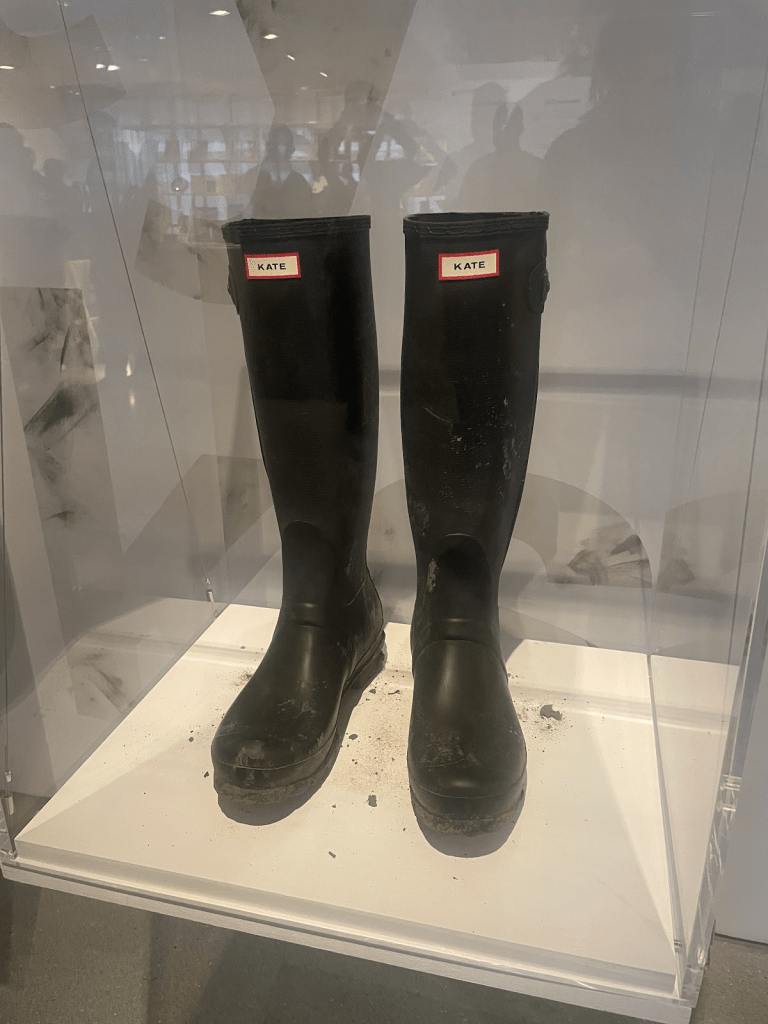
Image Credit: Josie Barry
Although the exhibition was thematic, there was also focus on particular designers. The Godfather of them all, exploring the relationship between fashion and the earth, is Hussein Chalayan.’ THE FUTURE ARCHAEOLOGY’ included his Central Saint Martins graduate collection, way back in 1993, when he buried and exhumed his clothes, some with metal filings. In 1995, a copper filings coated dress was buried near the Thames, transforming into patina green. He continued with these processes in his collections until 2003 with items resembling pieces from nature and his SS2002 collection he describes as, ‘a wish or curse that casts the garment and its wearer in a time through historical periods, like a sudden tumble through the sediments of an archaeological dig.’
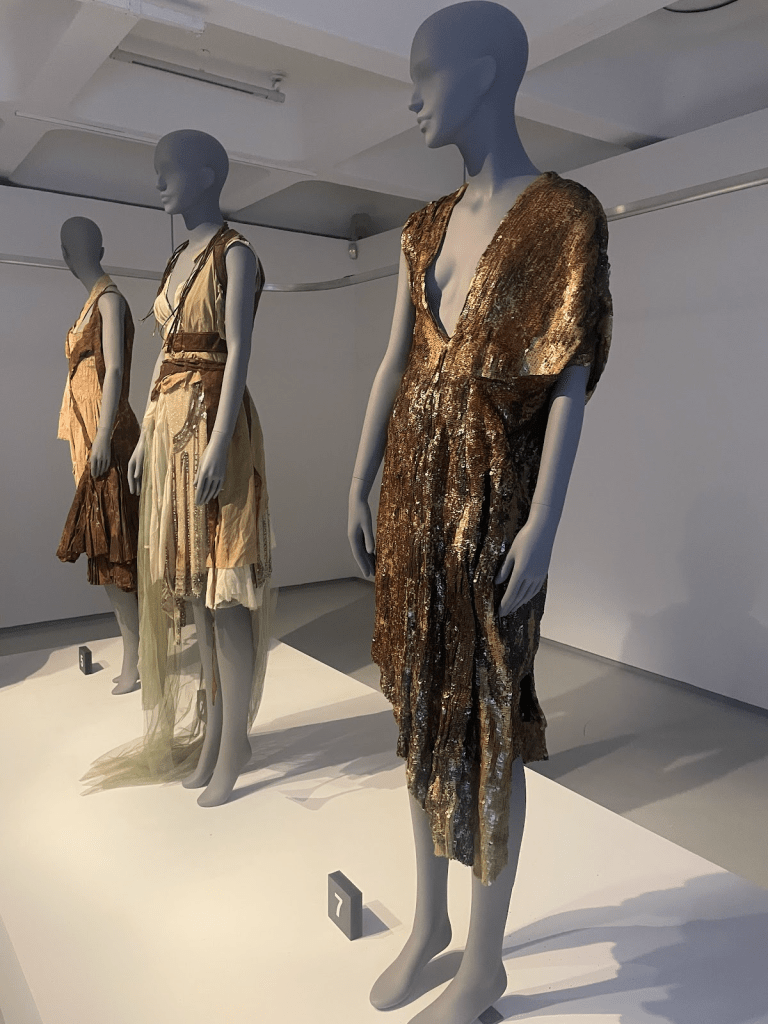
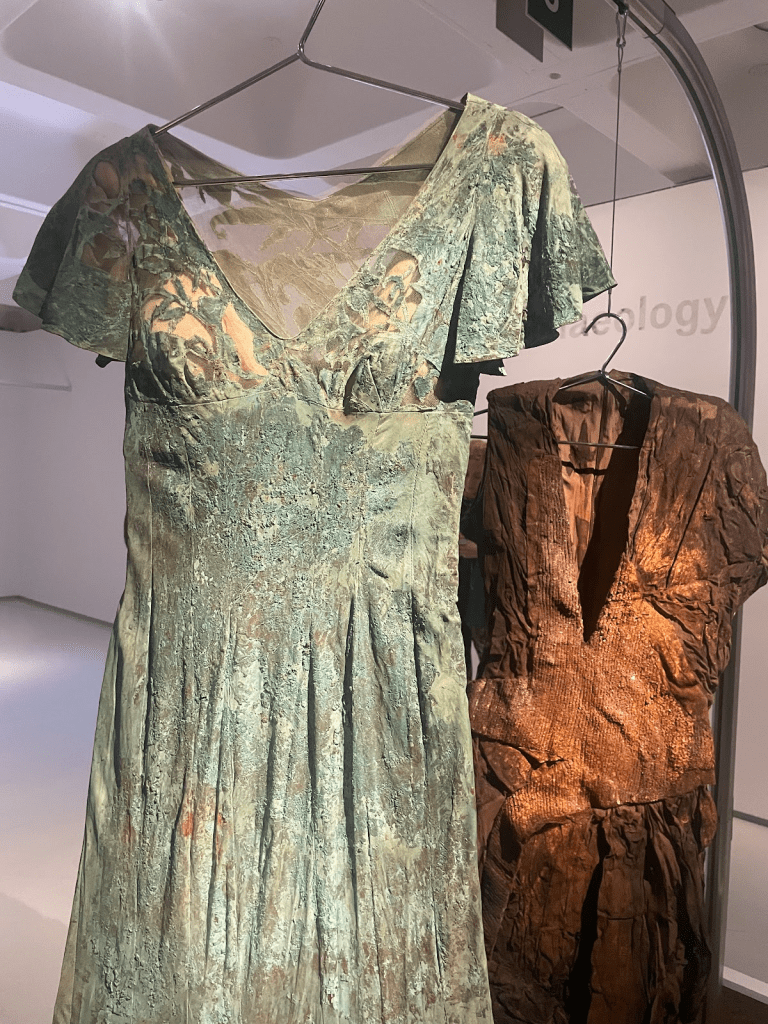
Image Credit: Josie Barry
The theme of waste generated by fashion consumption and the ensuing pollution from its production, flowed throughout, with fashion being the third most polluting industry on the planet. ‘FASHION EXCESS’ presented collections from repurposed materials, clearly making a political statement rather than with a commercial intent. Ahluwalia SS23 and Buzigahill Return To Sender 2025, presented a decent stab at casual and sports collections.
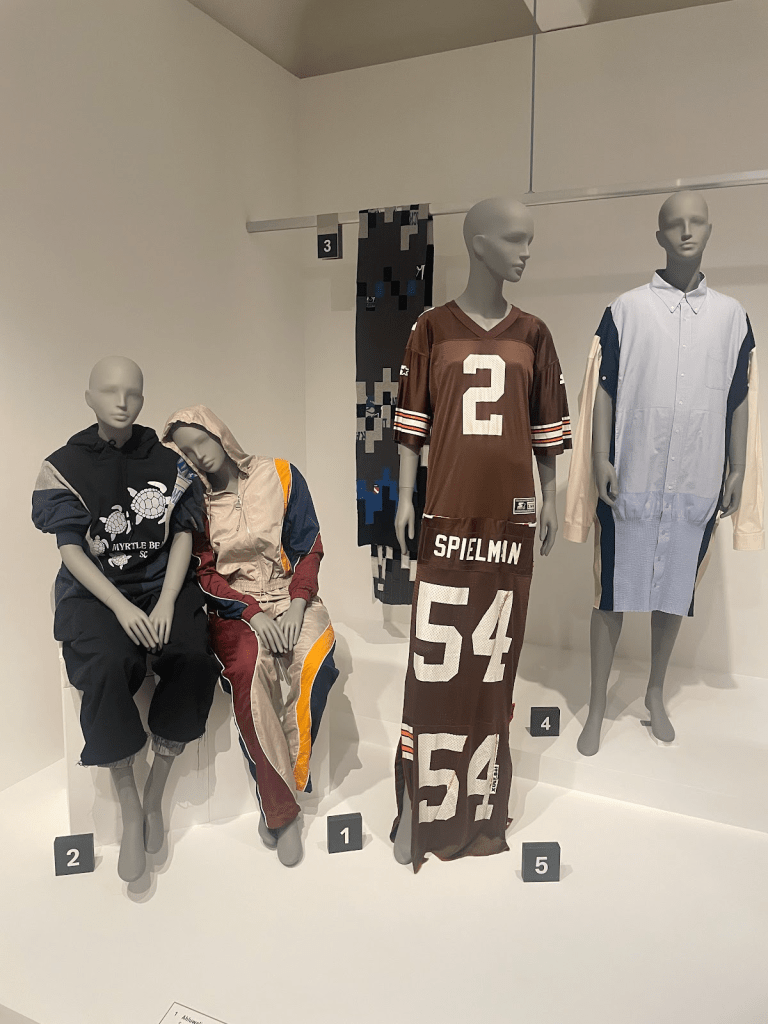
Image Credit: Josie Barry
‘GLITTERING DEBRIS’ presents less intense collections as the ‘no waste’ message, and displays the synthetic element of mass production – ‘turning trash into treasure.’ Paco Rabanne, ‘a pioneer in transforming household materials,’ caused shock waves in the sixties with his handmade metal and PVC disks collection and here we see his AW1992 bottle tops dress. A razor blades dress, from Andrew Groves’ SS1999 Cocaine Nights collection, rallies against the criticism by the US President Bill Cliton of the fashion industry of the time as ‘glamorizing drug use,’ and ‘heroin chic,’ accusations thrown at any skinny model. Hodakova’s Conventional AW2023 Collection, delivered a dress covered in spoons – no explanation – so make your own. A more chaotic, futuristic ensemble from John Galliano’s AW2018 ‘Artisanal’ Collection, has a transparent PU skirt and bra, encasing corrugated cardboard and high-vis fabrics.
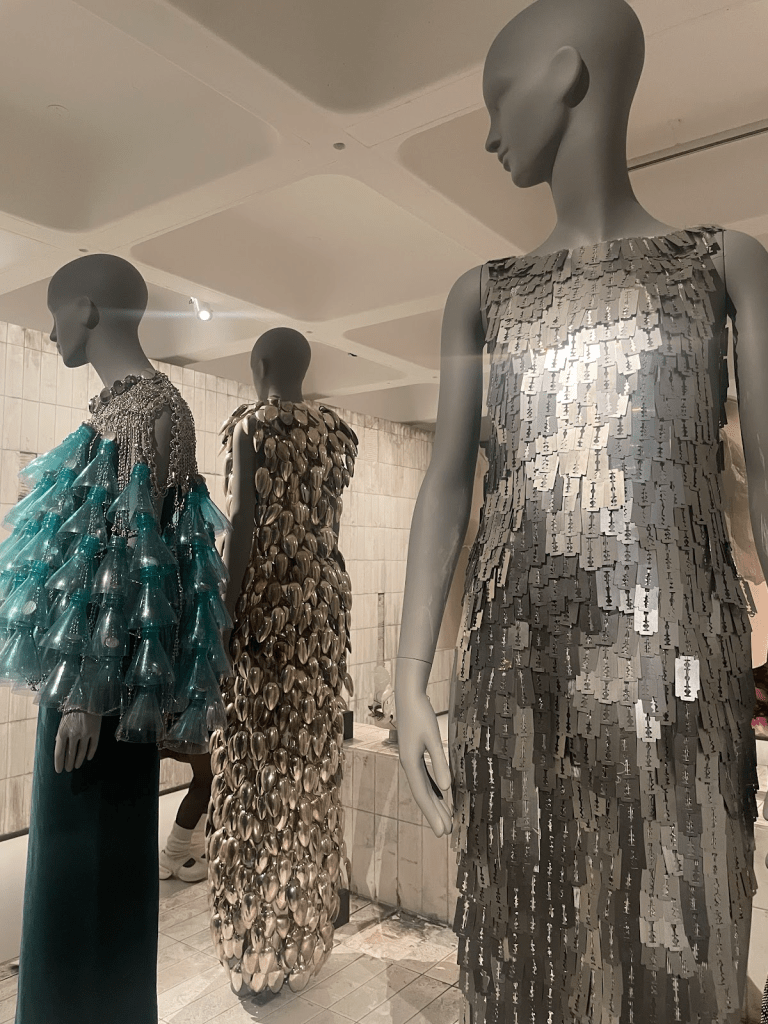
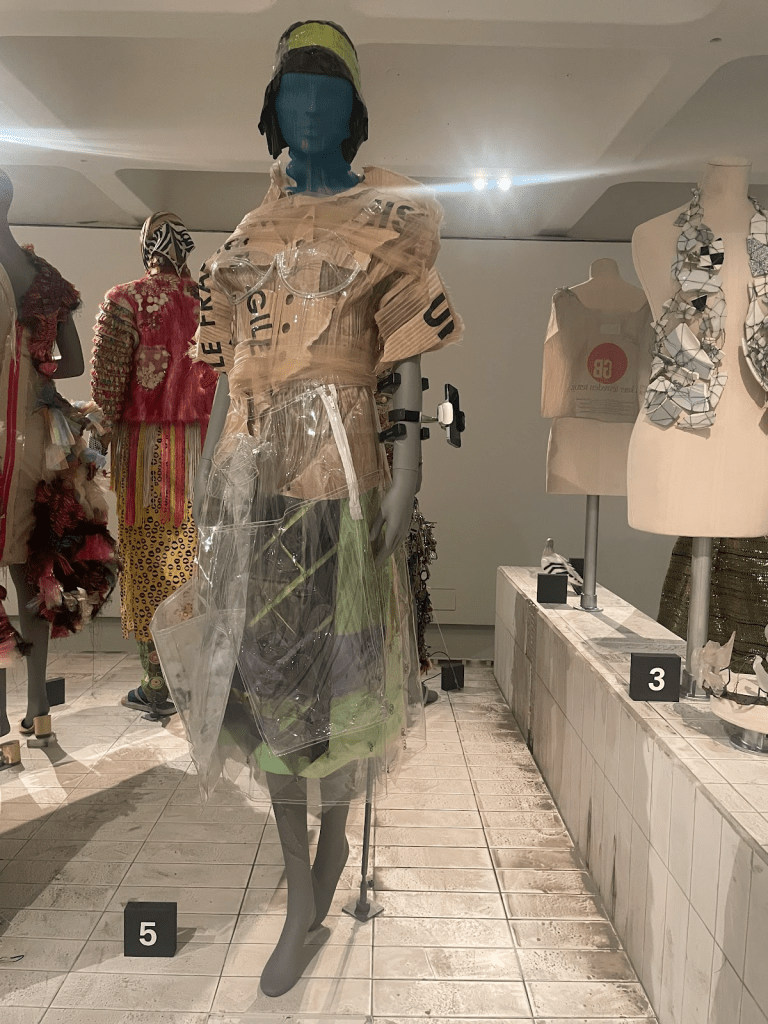
Image Credit: Josie Barry
Less alluring was the theme of ‘LEAKY BODIES’, alluding to the shame of female bodily fluids. A John Galliano piece from his AW2020 ‘Artisanal Co-Ed’ Collection, plays to the premise of purity, virginity, passiveness where dirt ‘suggests activity, agency.’ Advocating, ‘cleanliness is next to godliness.’
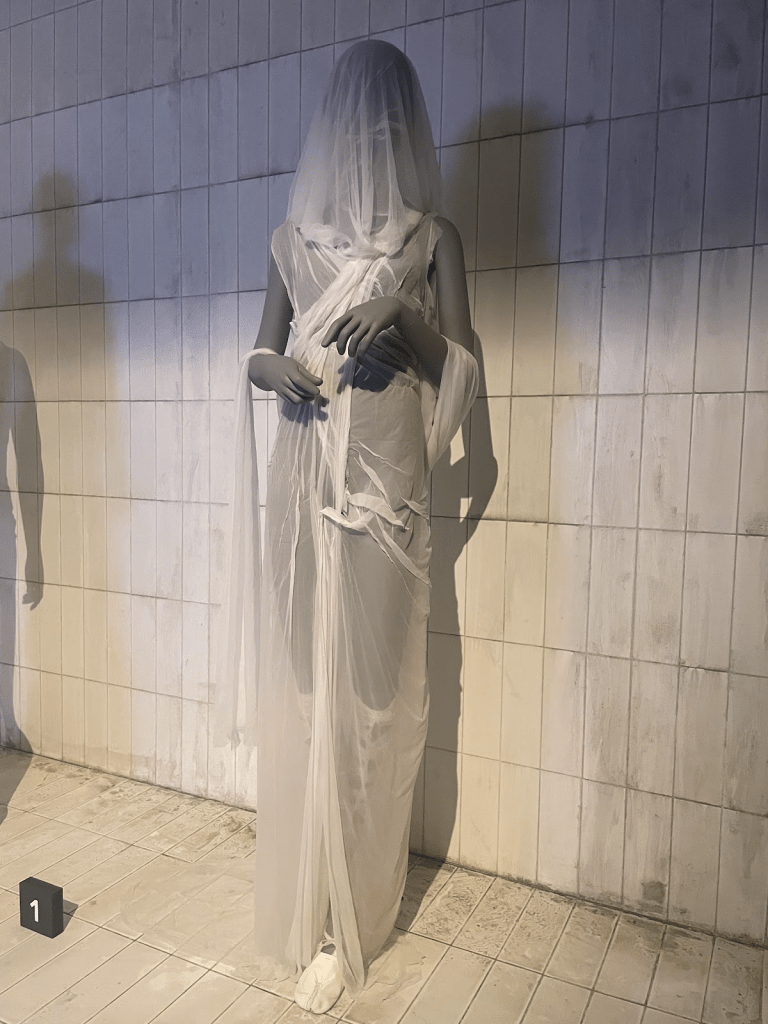
Image Credit: Josie Barry
‘SPECTRES OF DIRT’ has delivered a more commercial application that we would all recognise – ‘torn, worn and artificially aged fashion.’ Associated by the 19th century Bohemians as a rejection from industrialisations or Surrealists of the 1930’s, the 1950’s Beats, 1960’s hippies, 1970’s Punks and 1990 Grunge. Torn denim or frayed edges – imperfect garments beautifully illustrated by John Galliano from his AW2024 ‘Artisanal Co-Ed’ Collection and Vivienne Westwood from her SS1991 Cut, Slash & Pull collection.
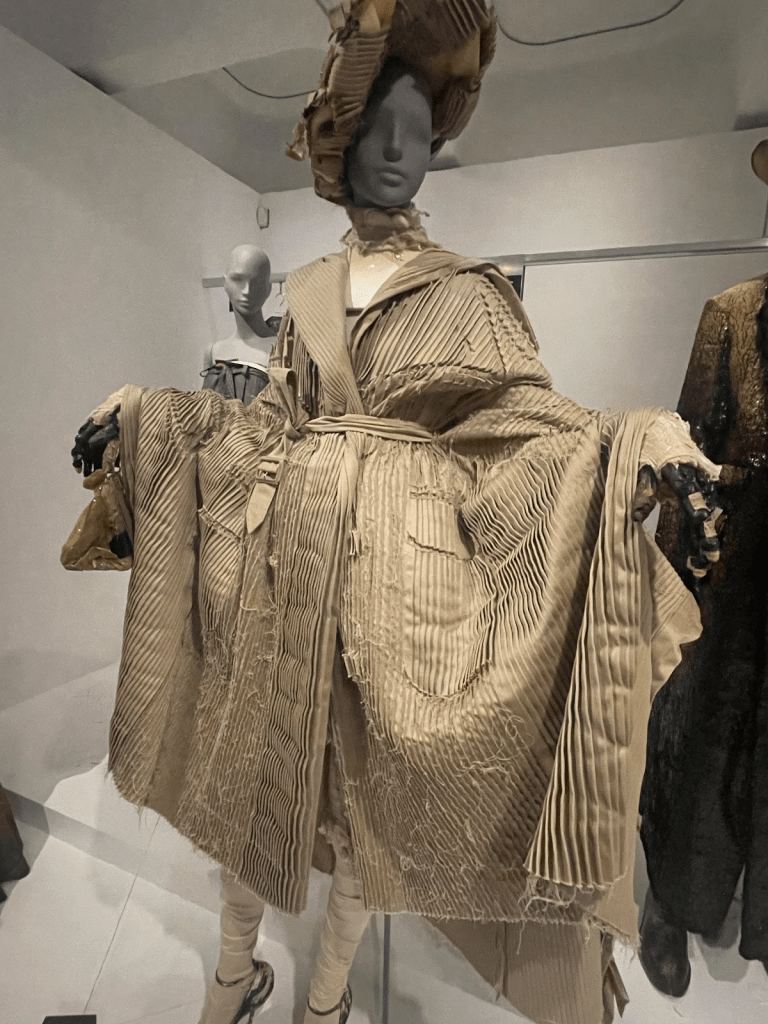
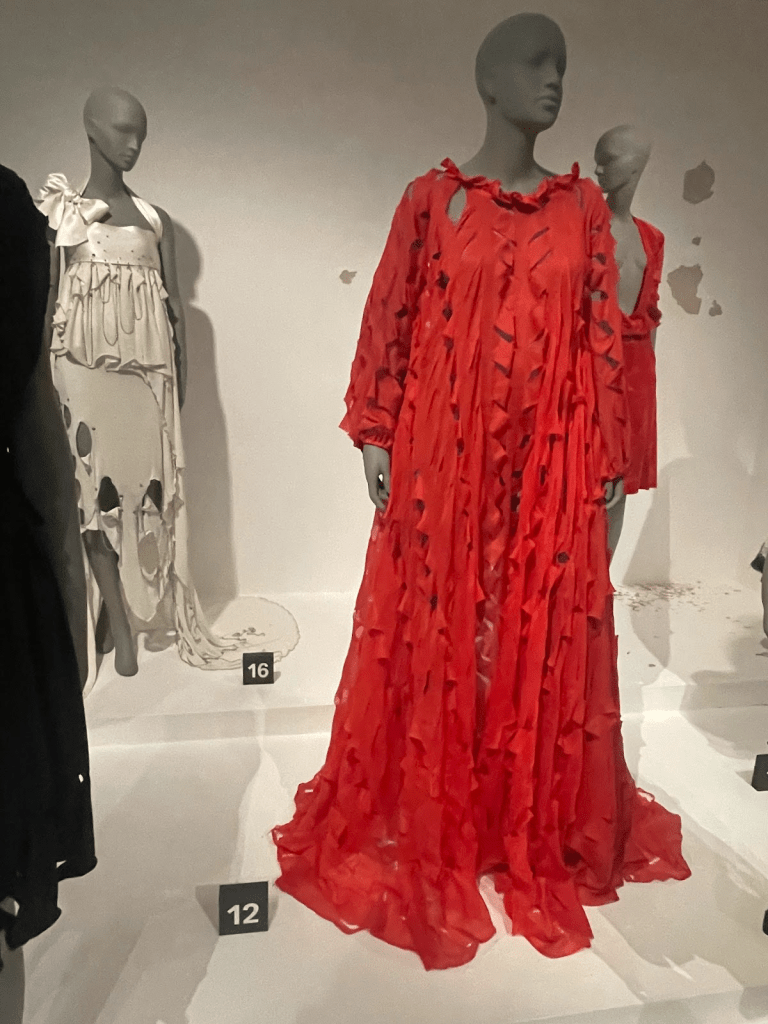
Image Credit: Josie Barry
Away from the conceptual installations and designs, ‘ROMANTIC RUINS’ puts aside the literal and political statements, to reveal the beauty in design from nuance. With the haunting spectre of Miss Havisham, the decaying bride from Charles Dickens 1861 Great Expectations, the genius that was Alexander McQueen, gives us an ethereal copper and patina dress from his AW1995 Highland Rape collection and torn chiffon from his SS2003 Irene Collection.
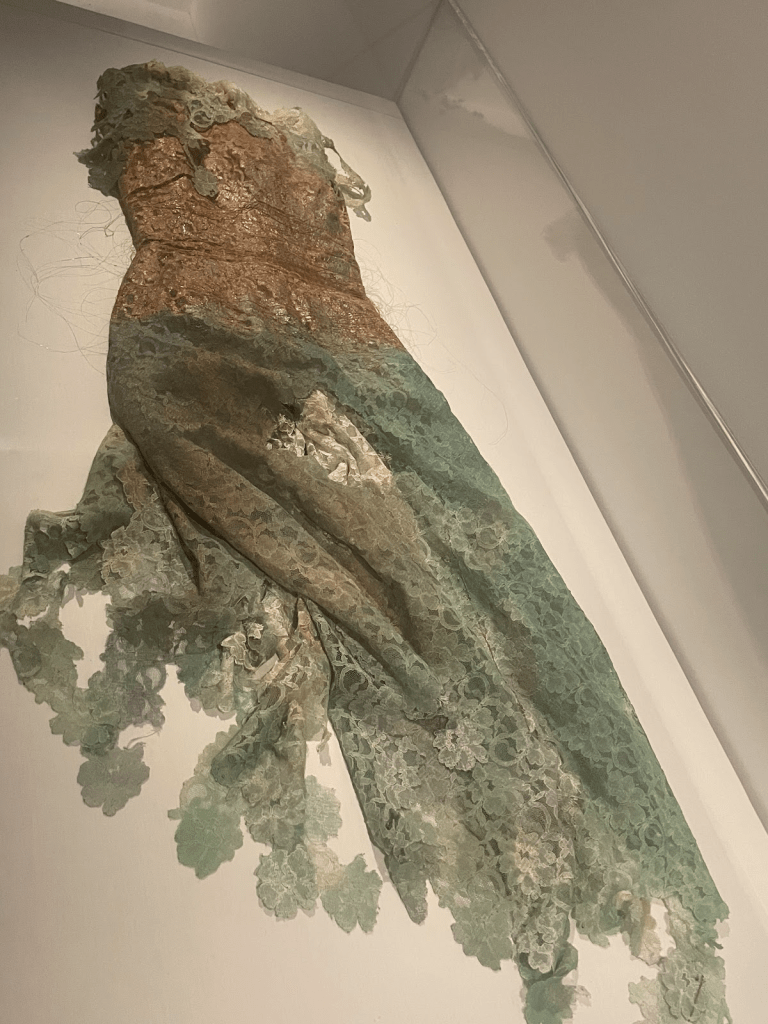
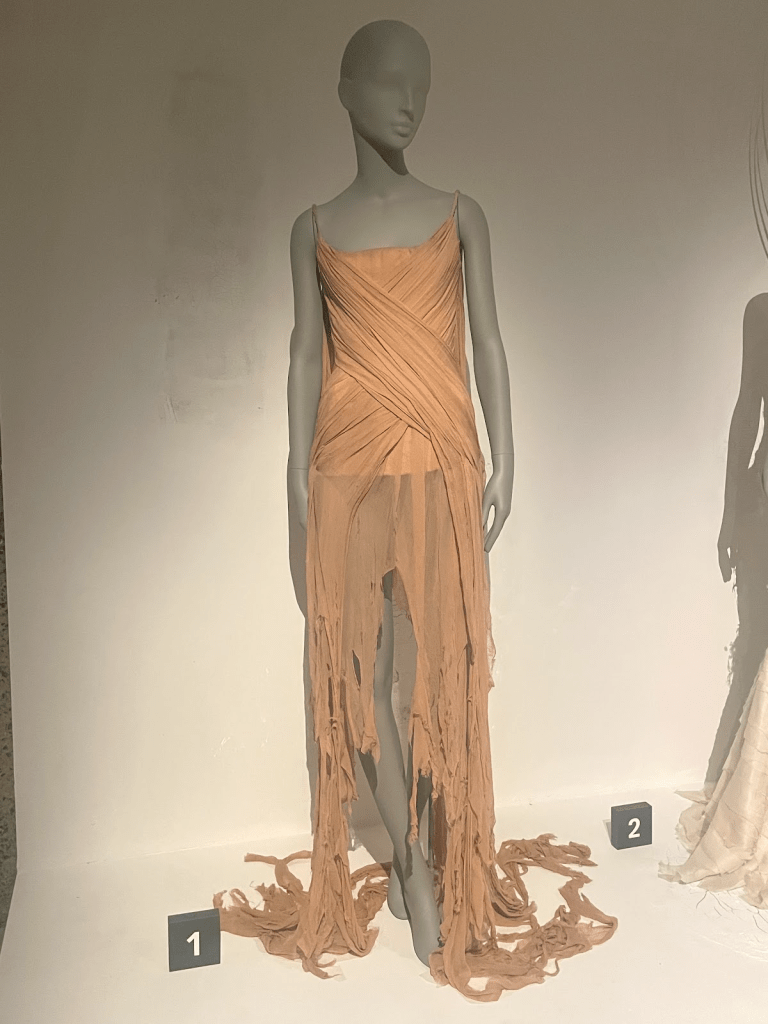
Image Credit: Josie Barry
The ‘NOSTALGIA OF MUD’, a phrase associated with French playwright Emile Auger in 1855, was chosen as the title by Malcom McLaren and Vivienne Westwood for their AW1982 show. It intended to demonstrate how ‘the roots of our culture lay in primitive societies.’ References from ancient Greek, cowboy-inspired sheepskins and forms of Latin American dress (which could now be interpreted as ‘cultural appropriation’), bounced down the catwalk in typical chaotic style. The premise, that those from the industrialised world, longing to associate with the rural and rustic, an aesthetic that continued through to the millennium.
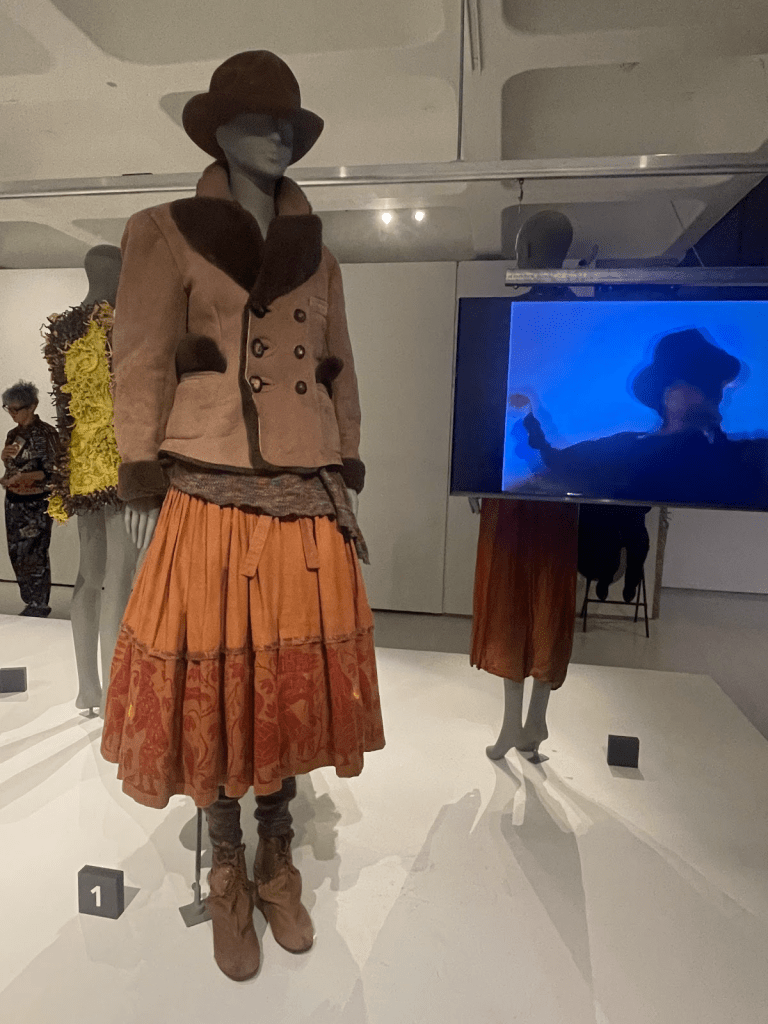
Image Credit: Josie Barry
In addition to all this creativity and messaging, there was one of the most thought provoking, informative and promising sections of the exhibition – Yuima Nakazato: ‘DUST TO DUST.’ Addressing the dumping of fashion waste in the third world, to recycling techniques for clothing for the future. It warrants more than a side bar in this article so will be given due attention in a follow up article.
The subject matter throughout the show is, in this climate, certainly provocative and engaging. Also notable for the fact that it has been part of designer’s consciousness from the 19th Century until now as it evolves into the world crisis on waste and the climate. The opportunity to see in the flesh, the creations of such a wide range of amazing designers, should not be missed. It may soften the blow to note that The Barbican has a pricing structure that includes, ‘pay what you can,’ if you go after 5pm.
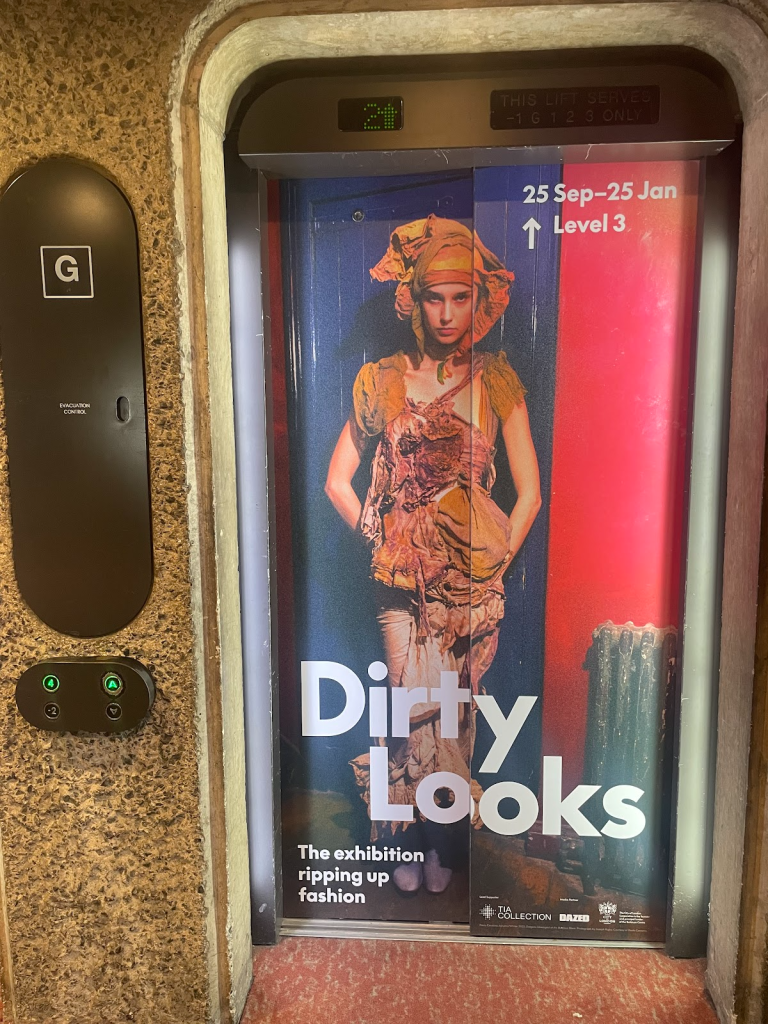
Image Credit: Josie Barry
Barbican Centre
Silk Street, London
EC2Y 8DS
Prices: £20. Students £14.
‘Pay what you can.’




Leave a comment