

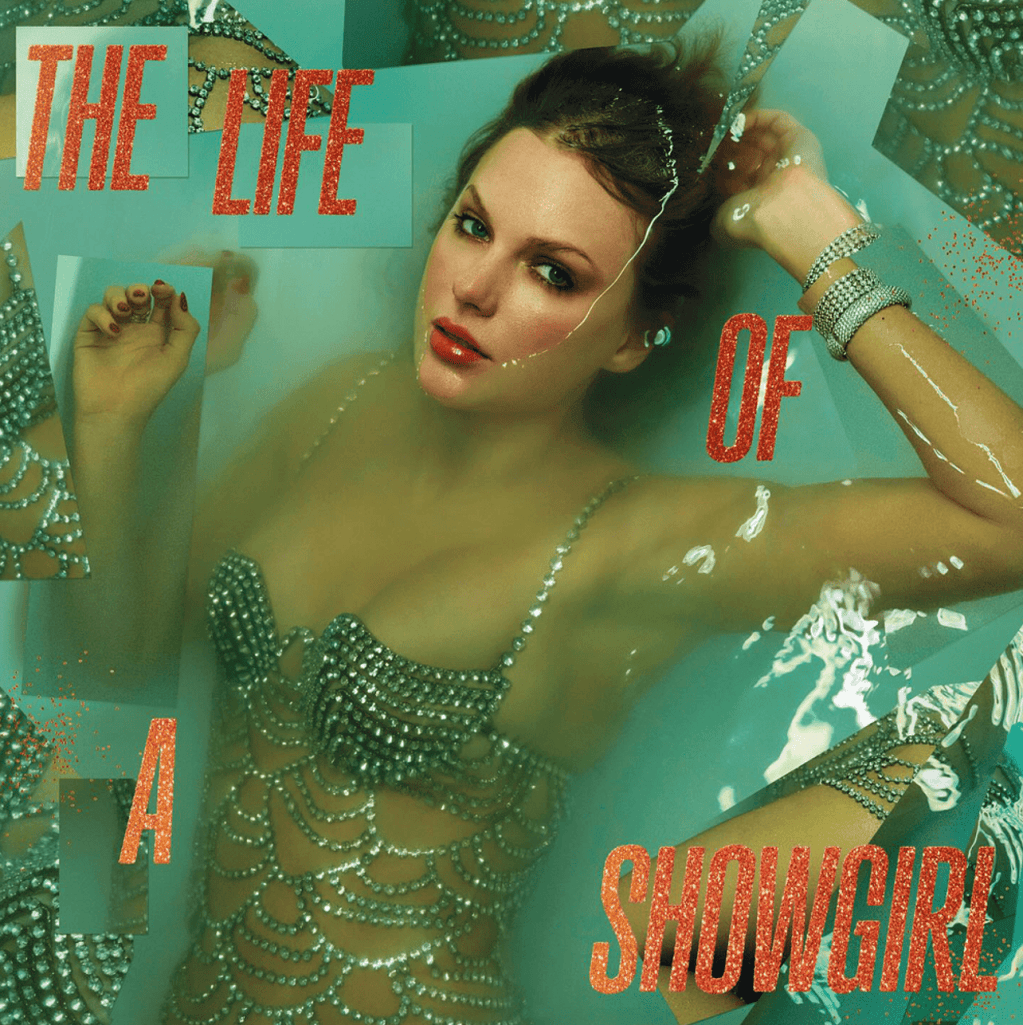
Image Credit: Mert Alas and Marcus Piggott
It was one of those rainy, dark nights that make you want to stay under the duvet, but instead, I made my way to a listening party for Taylor Swift’s highly-anticipated new album. It included watching the Eras Tour movie and making bracelets, followed by a screening of Wicked Part One (dream date). I was stocked up on about 20 cold and flu tablets, followed by an amount of caffeine that would put Lorelai Gilmore into shock. Both films are so long that the timing worked out perfectly, allowing us to catch the album’s release at 5 a.m.
My first impressions were not exactly glowing, but I have tried to cut Swift some slack; I’d barely had five minutes of sleep during Wicked and was dealing with a fever and sore throat. That said, my overall opinions haven’t strayed too far from what I heard that Friday morning.
‘The Fate of Ophelia’
We started off with ‘The Fate of Ophelia,’ a blend of Shakespearean storytelling with modern lyrics. It is undeniably a catchy song (yes, I have been seen dancing to this behind the counter at work…)
When the track title was announced, it felt as if A-Level English Literature me had been jolted awake from a long sleep. Finally another chance to dive into Hamlet. In the play, Ophelia is driven to insanity after her father’s death, perhaps a metaphor for Taylor’s own heartbreak throughout the tour. But unlike Ophelia, Taylor was saved.
The song’s reference to Ophelia is considerably inaccurate, depicting her as a woman who needs a man to save her, rather than a victim of a system where she has no agency. This stems from centuries of misrepresenting Ophelia on stage and screen,a flaw of directors who cast her as a damsel in distress.Now, not everyone spent two years staring at Hamlet, memorising every opinion on Ophelia just to survive an exam in a sweaty hall, so Swift’s broad take on the character is possibly agreeing with a more general perception.
‘Elizabeth Taylor’
This song carries an unmistakable old Hollywood glamour, with a clear focus on the actress Elizabeth Taylor. However, the chorus, where Swift repeats ‘Elizabeth Taylors’, comes off a bit tacky, only redeemed by her signature blend of Easter eggs and rich storytelling.
Elizabeth Taylor’s storied love life, eight marriages to seven men, embodied the dazzling chaos of old Hollywood. Swift echoes this sentiment, exploring whether her own relationships can withstand the intense spotlight of fame. So far, none have endured, but perhaps the one who finally put a ring on her finger might just break the pattern.
Interestingly, the iconic 50s actress has appeared in Swift’s lyrics before. In ‘…Ready For It?’, she sings, “You can be my jailer, Burton to this Taylor / Every love I’ve known in comparison is a failure,” referencing Elizabeth’s romance with actor Richard Burton. This connection proves even more intriguing considering Burton once starred in a production of Hamlet, a clever parallel to Swift’s earlier Shakespeare-inspired track.
Coincidence? Probably not. After all, this is Taylor Swift, and nothing in her songwriting ever seems accidental.
‘Opalite’
Next up is her fiancé Travis Kelce’s favourite track, and one thing’s for sure, Taylor still knows how to craft a catchy pop hit. It has been a while since we’ve heard a full album with vibrant, radio-ready songs. Departing from the familiar sound of her recent Jack Antonoff collaborations, Swift reunites with Max Martin and Shellback, the powerhouse producers behind some of her most iconic hits from Red and 1989.
The title is especially fitting. The man-made gemstone, Opalite, symbolises emotional healing and personal growth, perfectly aligning with the song’s message of making your own happiness.
Don’t believe me? Listen to Swift’s explanation of her song:
“I really loved the idea that the sort of manmade gemstone jewel, is also a metaphor for your own choosing. Choosing your own path to happiness making it yourself, it was manmade, it didn’t just happen to you. You had to fight for it, you had to work for it, you had to earn it.”
‘Father Figure’
When it was revealed that Swift had reached out to George Michael’s team about sampling his hit ‘Father Figure,’ people started to freak out. Not from excitement, but out of concern she might ruin the original.
But the result was nothing like anyone expected.
We can clearly see the industry-wide power dynamics at play in this song, and the exploited side of being a showgirl. The concept of a “father figure” in the industry appears to represent protection and mentorship, someone who wants to guide and elevate your career. However, more often than not, this dynamic ends up prioritising profit and control, particularly over young and impressionable artists. Most infamously, the relationship between One Direction and Simon Cowell.
While the song’s lyrics don’t appear to directly connect to the 1988 track, George Michael’s music video offers an intriguing parallel. In it, Michael portrays a strained relationship with a model, a possible nod to the archetypal showgirl, the woman constantly performing both on and off stage. The model, Tania Coleridge, known for her signature bob haircut, is rumoured to have inspired one of the cover artworks for The Life of a Showgirl.
Speaking about the meaning of the song, Swift explains the dynamic between a showgirl and their mentor: “essentially it ends up in a who’s gonna win situation, who’s gonna outfox the other?”
While she doesn’t, and likely never will, name him directly in her songs, the theories surrounding ‘Father Figure’ point to Scott Borchetta, the man who “discovered” young Taylor Swift and later sold her masters without consent.
‘Eldest Daughter’
Upon first listening to the song, and after observing initial reactions online, it was evident that the track didn’t align with many listeners’ expectations. However, after examining Taylor’s commentary on its meaning, the lyrical and thematic choices become more understandable. However , it has become a major talking point online, with the so-called cringey lyrics, “But I’m not a bad bitch / And this isn’t savage,” dividing listeners.
While it is easy to understand why initial reactions to the song were mixed, hearing Taylor unpack the meaning behind it offers valuable context:
“The entire first verse of Eldest Daughter is somebody trying to figure out how to say things that they’ve read on the internet, whether it be like ‘apathy is hot’ or ‘memes and trolling’ and how do I keep up with how we’re supposed to talk in order to describe how much we don’t care when really we all care about something.”
I completely understand what Swift is getting at. I have been, and still am, guilty of this myself. It’s about the contrast between how we present ourselves and how we truly feel inside. For a showgirl, that means the difference between who she is on stage compared to her private life. But I feel like this feeling of having multiple versions of ourselves and questioning our identity is a universal experience.
However, I don’t know if this was the best way to lay out the confessional song. I have to agree with critics that the slow ballad of her traditional track five does not work with the lyrics. A track that usually feels raw becomes quite detached, which therefore lessens the song’s emotional resonance.
‘Ruin the Friendship’
Back when friendship bracelets were serious business and walking to class without someone felt like the ultimate betrayal, Taylor’s here to remind us that we are all still lugging around those regrets, just now in adult-sized backpacks.
This song delves into the complexity of unspoken love, having a crush but never acting on it, and feeling the sting of missed opportunities. Yet looking back, it’s clear it was never as monumental as it felt at the time; the world is bigger than being a teenager obsessed with a crush.
The most surprising element of the song is the death of the crush within the story. Listeners have speculated that this references her friend, Jeff Lang, who tragically passed away in 2010, particularly since the song also mentions her friend Abigail.
But how does this link with the ‘showgirl’ theme? In my personal opinion, it can be seen as Swift reflecting on the very beginning of her career. During the Eras Tour, she performed songs she had not sung live in years, requiring her to dig deep into her past. She was likely reminiscing about a time before she became this ‘showgirl’, reflecting on the opportunities she missed when she was young.
‘Actually Romantic’
Like many tracks on the album, the lyrics to this song were leaked and widely shared on X before its release. Fans eagerly awaited, fueled by rumours that Taylor Swift was about to drop a “diss track.”
If you’re curious about the “drama” surrounding Taylor Swift and Matty Healy of The 1975, feel free to dig inThe same goes for the lore between Swift and fellow artist Charli XCX. I would suggest doing a little research and seeing what you make of it.
Whether you do that or not, ‘Actually Romantic’ explores the opinion of a woman who has a lot of resentment towards the narrator. Swift portrays this fixation as obsessive, almost mirroring love. . Taylor surely must have been aware that this song would divide listeners, which in itself makes the track a daring artistic choice. However, despite this bravery, I am not convinced that the song landed as effectively as she may have intended.
‘Wi$h Li$t’
The next two songs are presumably further odes to Swift’s fiancé, Travis Kelce.
I find myself returning to ‘Wi$h Li$t’ more often than some of the others, but the occasionally bizarre lyrics and sometimes disjointed references.It shifts abruptly between references of someone wanting a “contract with Real Madrid” and someone else desiring “a fat ass with a baby face.” While I understand the intent, it did make it less engaging as a listener.
I found that the acoustic version of this song was more effective in delivering its message. Stripping away the pop synths allows the lyrics, previously annoying or seemingly random, to reveal their ironic intent.
‘Wood’
Laced with innuendos, ‘Wood’ has highlighted that Taylor has been spending a notable amount of time with Miss Sabrina Carpenter recently. Swift has mentioned that, while working on the song, the lyrics became increasingly daring and playful, which is evident throughout the track.
Everyone has seemed to be a hater about this song, but I can’t help but think it’s not that serious. Sometimes a girl just wants to be happy! I think the playful lyrics work within this style of song more than the previous tracks.
Look, it might not be for everyone, but I think it is one of those songs you put on in the car with your friends, and sometimes that is all a song is good for.
Taylor Swift Breaks Down The Life of a Showgirl’s “Wood,” “Father Figure” and “The Fate of Ophelia”
‘CANCELLED!’
I am honestly not sure where to even begin with this song. It is, by far, my least favourite on the album, and I find that it comes across as tone-deaf. The lines that references “Gucci” feels out of place, and the overall stylistic choices seem more suited to 2017 than to the current soundscape of the album.
There is a fine line between critiquing performative outrage and dismissing legitimate accountability, and the song occasionally feels like it leans too far toward the former. For listeners aware of real instances in which public figures have caused genuine harm, the humour can feel misplaced and insensitive.
‘Honey’
If this song was to be placed on Folklore or Evermore, with the pop beats stripped away, it would likely resonate far more effectively. Unfortunately, I think this is true for many of the songs on the album, which likely contributes to the widespread critique of her lyricism.
Swift uses terms like “honey” and “sweetheart,” words that carry a long history of being condescending and often sexist. However, through the narrative of finding someone the narrator genuinely loves and respects, these words are recontextualised. Within this relationship, they regain their traditional, affectionate meanings.
I would argue that this is my second favourite song on the album, not necessarily because of its lyrical depth or thematic complexity, but simply because I love it. Sometimes a song resonates not for its artistry or message, but for the way it makes you feel while listening. For me, this track captures that kind of personal appeal.
‘The Life of a Showgirl’ ft. Sabrina Carpenter
In a Greatest Showman–style grand finale, the final track introduces a fictional onstage performer, Kitty, who is reaping her success;getting bouquets and high praise. But Kitty warns that the life of a showgirl isn’t as glamorous as it seems; there are prices to be paid for fame.
It is the first collaboration between Swift and Sabrina Carpenter, an artist who has achieved remarkable success and previously opened several shows on the Eras Tour. In the second verse, Carpenter reveals more about Kitty’s past, portraying her as a girl who came from a privileged upbringing but rebelled against her parents’ expectations.
Despite the difficulties, the song ends with a sense of acceptance and pride: “I’m married to the hustle … Wouldn’t have it any other way.” The showgirl (presumably Taylor) is not regretful. She chooses, or has come to choose, this life despite knowing its costs. Carpenter’s involvement in the song also reinforces its central theme. Taylor explained that she chose her because she embodies “a love for the game that overrides how hard this can be.”
While critics have pointed out that the glamour-versus-pain trope is somewhat overused, I really do think it is a beautiful ode to Taylor’s career. Throughout the album, it’s clear that she’s reflected on her journey to the stage.
The outro includes a live snippet from the end of one of the Eras Tour shows, capturing Taylor as she says goodbye to the audience. Using this real recording creates a powerful full-circle moment, a literal and symbolic curtain call that brings the album’s theatrical theme to a fitting close, marking the end of another act in Swift’s life. By concluding the album with a farewell to her fans, she reasserts herself as this showgirl, fully aware of both the sacrifices and triumphs that come with being a global performer capable of delivering such an extraordinary three-hour show.
To conclude, The Life of a Showgirl may not have captivated everyone, but it feels like the kind of record Taylor is genuinely proud to have made. For certain tracks, I feel the risk didn’t quite pay off, specifically ‘Actually Romantic’ and ‘Cancelled.’ However, it carries a sense of sentimentality and reflection that sets it apart from some of her previous albums.
But this raises a larger question: is Swift creating music primarily for her listeners, or is she now making the music she wants to make, independent of fan expectations? This tension invites even more questions about her position in the industry. As a billionaire artist, she occupies a unique space where commercial success and personal expression intersect.
I would like to leave you with a final thought: if The Life of a Showgirl weren’t presented as a standalone album, but rather as a collection of songs scattered across Reputation, Folklore or 1989, would listeners be as critical of its songs and lyrics? It raises the question of whether the mixed reception comes from the music itself, or from the expectations attached to a new Taylor Swift era.
I don’t have the answer myself, but it’s worth considering all the possibilities.


Leave a comment