


Image Credit: Flickr
Laufey’s A Matter of Time arrived in August of last year and marked a sense of growth in her musical themes and ambitions. Previous albums, such as Everything I Know About Love, were celebrated for their preservation of jazz aesthetics and soft romanticism, a collection of ideas that began to spring to mind upon the thought of the Icelandic musician. A Matter of Time provides a deeper focus on the pressure and complexities of these soft moments and human connections; time is simultaneously a theme and a threat to idyllic storylines and picture-perfect relationships. It is a tool with which Laufey invites her listeners to sense. Songs like ‘Too Little Too Late’ demonstrate the movement of time through flippancy, denial, and acceptance:
‘Guess that we’re soulmates in a different lifetime’
She recognises the enormity and significance of feelings of unrequited devotion, allowing them to be pocketed away into different timelines that could have been, but weren’t. Laufey seems to guide the listener through the significance of feeling even when it is unrequited , and how this builds perception and growth towards ourselves.
Love, in A Matter of Time, is less of a deterministic fate, concerning itself with the miscommunications, pitfalls, and delays to the end of the line. Laufey portrays the concepts of feeling and action as unpredictably varied, rarely aligning together for the perfect result. Her utilisation of narrative and story in ‘Snow White’ and ‘Castle in Hollywood’ produces intelligent and dreamy reworkings of familiar tales. Laufey uses these methods to explore themes of female rivalry, vulnerability, innocence, and emotional dissonance. ‘Lover Girl’ and ‘Snow White’ are married mirrors of themselves, both a study in self-reflection. ‘Snow White’ is hauntingly stunning in its melody, and viciously sharp in the narrator’s letter to the standards of beauty, femininity, and constraints.
‘The world is a sick place, at least for a girl’
‘Lover Girl’ demonstrates a self-acceptance in reciprocated love, and more importantly, the feeling that it is deserved and reflects the speaker accurately. Love may be a fairytale and a comedically enjoyable ‘curse’, but it also lives in domestic and quiet settings when it is the right person and the right time. ‘Castle in Hollywood’ also dotes on heartbreak within female friendship, and the subsequent feelings of the ‘end of… girlhood’ as a result. ‘Castles’ and ‘Hollywood’ join together the wildest dreams of two young girls, which come up against harsher realities as the song tells a story of their growing apart. Again, Laufey looks upon lifetimes and timelines that parallel reality, and the loss of what could have been when it was once dreamed of with such ease. The album also utilises imagery of nature. Another cyclical view of time that weathers, withers, blooms, and repeats is echoed by lyrics on flowers and fields throughout the album.
‘I thought that lilies died by winter
Then they bloomed again in spring’
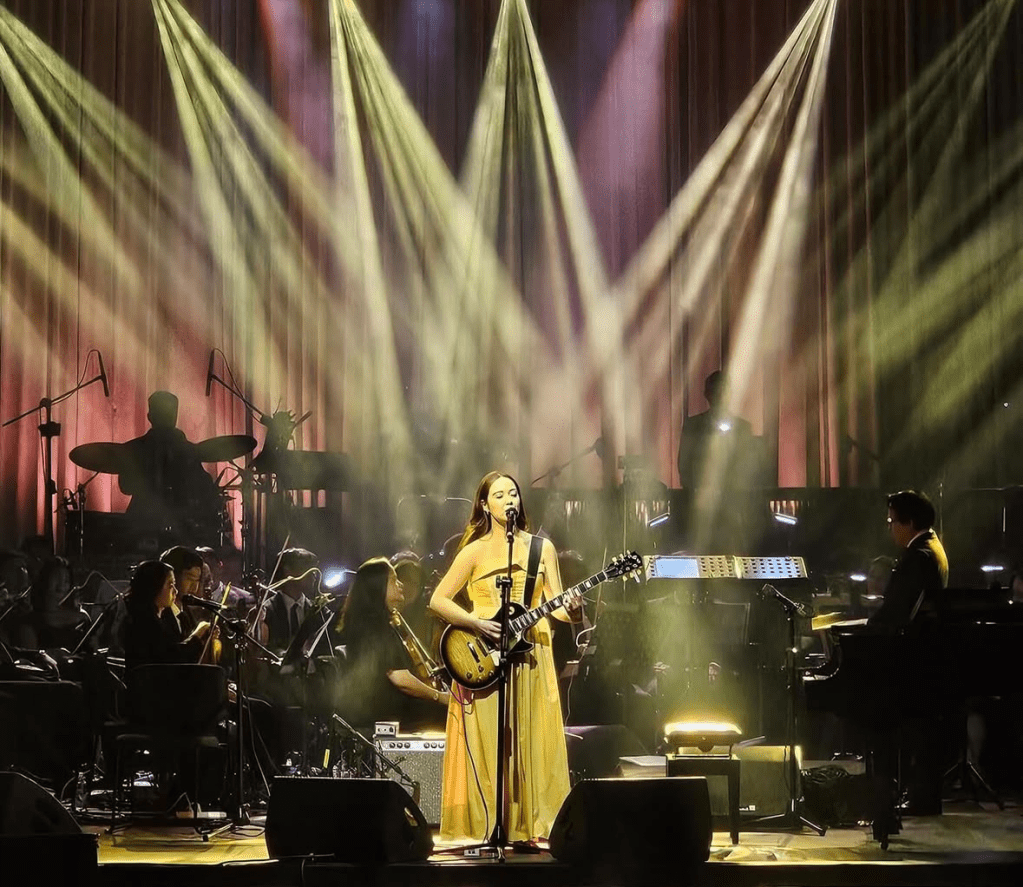
Image Credit: Wikimedia
The songwriter portrays the warmth she still holds for a beloved friend, even though it no longer burns brightly. She demonstrates another way in which time and love are married together, that even when time is the reason for distance and loss of touch, it also allows for reflection and memory that can be looked upon fondly. This mirrors similar techniques in ‘Forget-Me-Not’, speaking of the ‘bends in your body, the hope of your spring’. Here, Spring is personally held by the figure she begs not to forget her, hoping to harness time and conjure the cyclical and eternal nature of flowering and inspire it inside of this relationship.
Laufey’s vocal performance in these 14 songs continues to impress and push the boundaries of her range. Tracks like ‘Tough Luck’ illustrate both vocal technique and emotion, without either suppressing the other. The breathy and quickened pace used in the song’s final hurrah in its repetition of ‘tough luck’ demonstrates anger and feeling as necessary textures to the overall album. The intensity of emotion surrounding these experiences of betrayal and belittlement is replicated in a way that is incredibly raw and relatable for the listener; Laufey reaches across expectation and shakes the shoulders of her audience, bridging the gap between them. Contextually, the association and expectation of female singers to remain soft and gentle is challenged even by an artist with such control over this side of her music, showcasing more layers and intricacies. In the album’s production, emotion is built and stagnated almost frustratingly, but it serves a larger purpose in describing such understandable and real journeys.
We’re reminded of her exceptional talents for instrumentals in ‘Cuckoo Ballet – Interlude’, a whimsical and soaring chorus of violins providing reflection and appreciation mid-album. Not unlike the strings from a fairy tale movie or children’s fantasy, the song emphasises the album’s cinematic and cohesive qualities as a whole.
Ultimately, the album is an exciting shift from Laufey’s musical foundations, but in no way abandons them. Her ongoing tour with the release provides a reminder of this. Grand stages and overwhelmingly beautiful full orchestras reflect the vast expanse of human experiences Laufey’s music speaks to. I’d highly recommend giving the album a listen, as well as the rest of her catalogue.


Leave a comment