

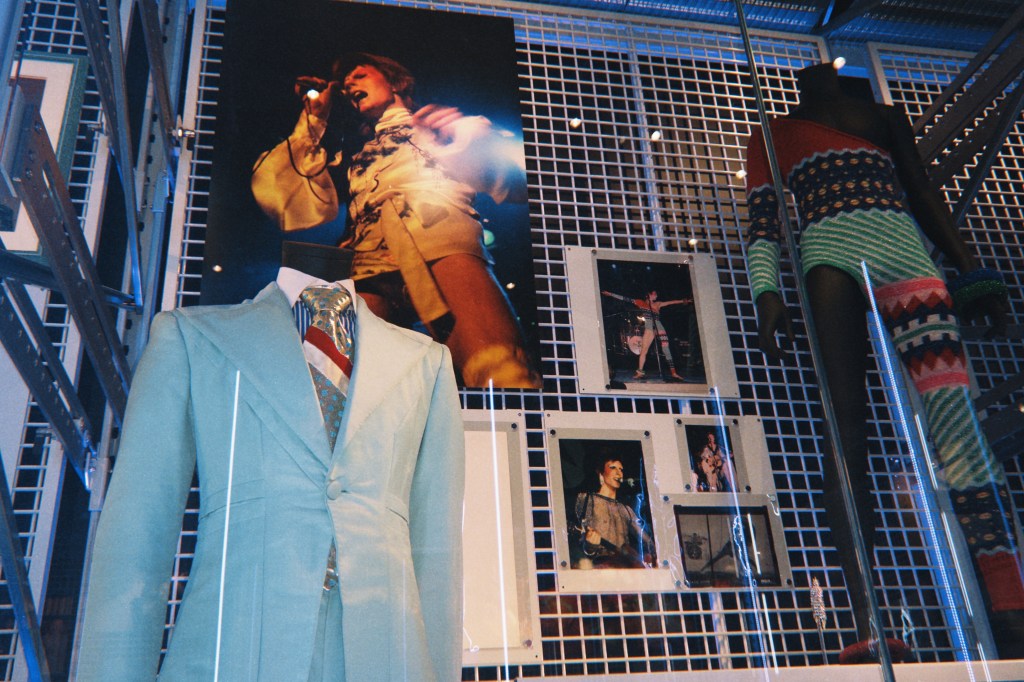
Image Credit: Jolie Whittingham
I remember attending a previous David Bowie Exhibition at the V&A and never wanting to leave. Admittedly, the historical content was lost on me but the explosion of visual artistry and fashion especially, was spellbinding. Hence my excitement when the V&A announced that they were opening a permanent David Bowie centre – pulling from an archive of 80,000 items, it must be huge… I’ll need to keep the whole day free… or maybe not.
The V&A East Storehouse is the newest arrival at The Queen Elizabeth Olympic Park in Stratford, East London. Originally the home of the 2012 Olympics, it has developed into a residential village and in addition to the sports stadiums, now has its own impressive arts quarter with a UAL campus and another V&A East Museum (opening April 2026). We should also remember how lucky we are in this country that our major museums and art galleries do not charge for general entrance – a stark reminder when you travel abroad and are ripped off at every turn (The Louvre, €79!).
The V&A Storehouse is a new concept, describing themselves as ‘a working museum.’ There’s no getting away from the fact that despite its supposed £64 million cost – it does look like an IKEA warehouse. Maybe this is an intentional attempt to encourage interaction with the archives, in a less intimidating and familiar setting. The V&A strive to appeal to all with collections, they say, ranging from, ‘The Glastonbury Festival Archive, Elton John’s costumes and Dior haute couture to Samurai swords, Roman Frescos and Mid-Century furniture.’ It is an opportunity to access and study the collections in the archive, which number over half a million. As well as mini collections, you can order what you would like to view or study and it is delivered to a table accompanied by an expert. There are QR codes throughout, providing detailed information on the exhibit.
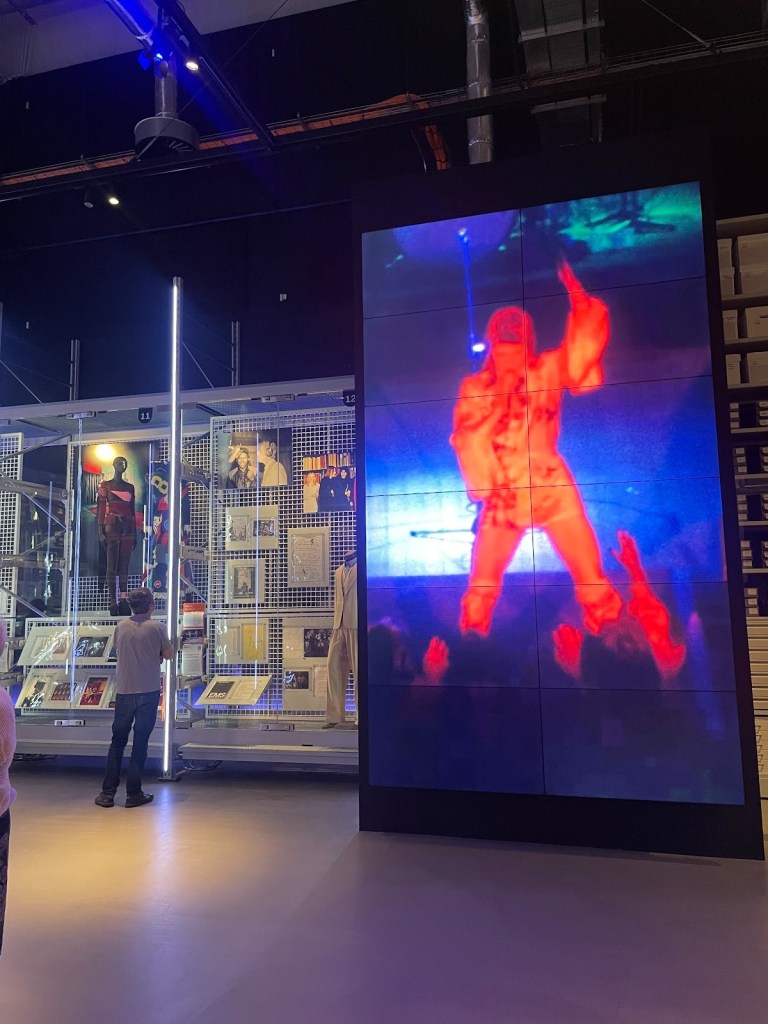
Image Credit: Josie Barry
The David Bowie Centre is actually a small area on one of the floors. Described as an ‘intimate’ space, it is home to Bowie’s 80,000 items but displays only 200 at any one time. An attempt at atmosphere is created by giant scenes, pumping out Bowie footage which is actually worth taking a pause to watch. The displays are rotating and curated into themes behind glass cases, most of which have never been displayed before. Rows and rows of drawers and cupboards, house archived items which you can order to view, testimony to their vision of the centre as a ‘working archive.’ But for an everyday punter – where would you start? If, like me, you loved Bowie’s fashion, you have to look to the sky to see a rail – reminiscent of your local dry-cleaners, tantalisingly out of reach.
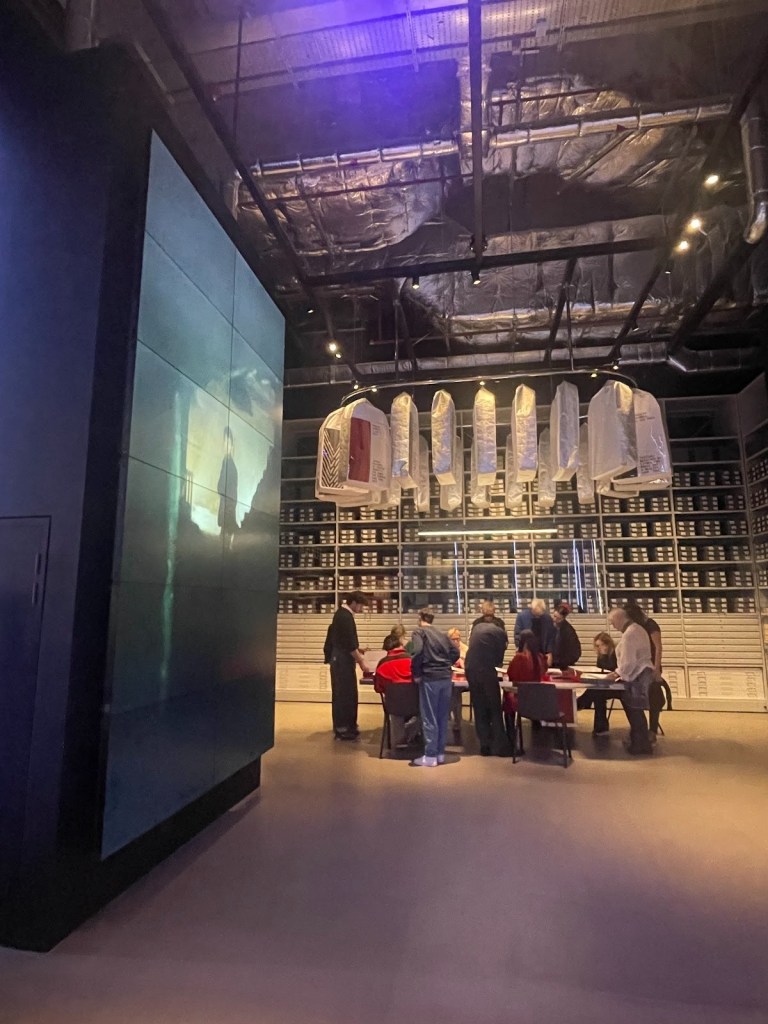
Image Credit: Josie Barry
Icon is too lame a word to use for David Bowie as someone who had such an impact on the creative landscape and influenced so many. The context of his early incarnations, cannot be appreciated from a modern lens, where very little shocks. In the 70’s, his ‘Space Oddity’ persona was very fitting for a society that could only comprehend him as an alien. Bowie was very much his own person and wouldn’t be pinned down with labels and often contradicted statements he made, including those of his own sexuality. ‘If I’m responsible for people finding more characters in themselves then I’m pleased. There are many facets of the personality.’
The collection was donated by The David Bowie Estate and a £10 million private donation. Was it arrogance or historical foresight that Bowie had such self-awareness of his impact on artistic culture, to have built his own archive throughout his life, from which we are now benefitting? Probably a bit of both. A special example of this is the rejection letter the 19 year old Bowie received from Apple Records, who, ‘didn’t feel he is what we are looking for at the moment.’
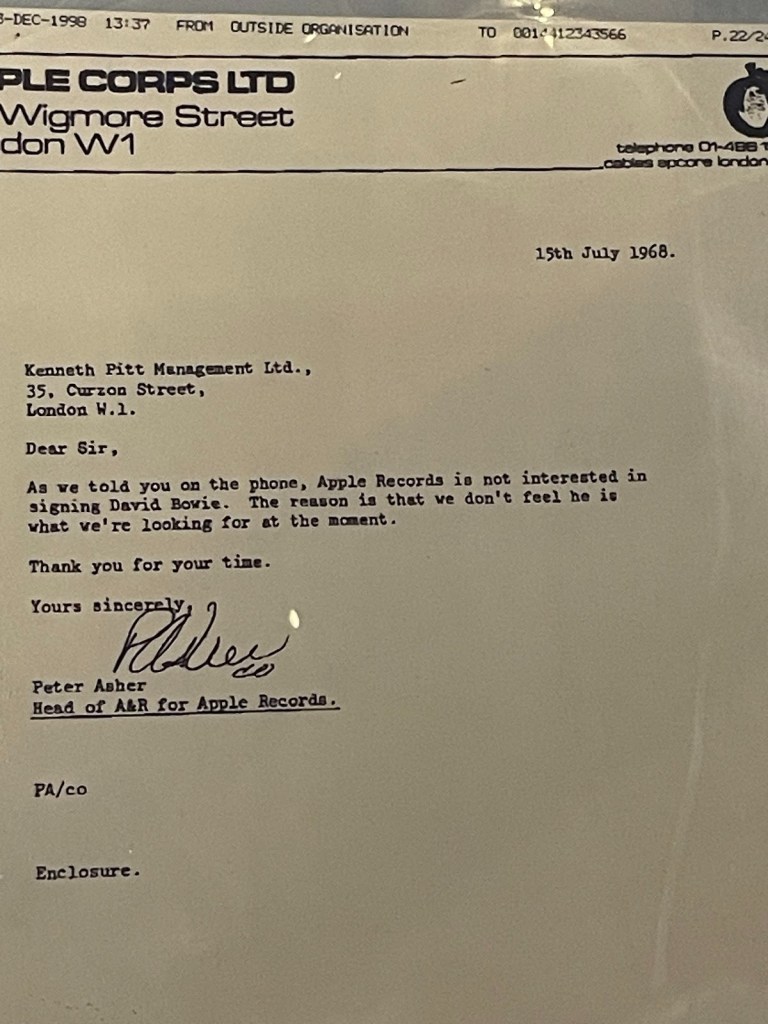
Image Credit: Josie Barry
The curation of the display does highlight, not just Bowie’s chameleon superpower through the decades, but his impact on each. Quotes throughout from the man himself are a nice touch, as you attempt to digest the multitude of objects offered up for scrutiny, allowing a sliver of insight into events. Ziggy Stardust’s androgynous alien was followed by ‘Young Americans’, influenced by his love of Little Richard and R&B soul and funk. The glamourous Thin White Duke persona created for this era was unrecognisable to his earlier Glamrock spaceman.
The 80’s saw Bowie use his platform for activism. His ‘Let’s Dance’ music video from his 1983 album, starred dancers from Sydney’s Aboriginal Islander Dance Theatre, highlighting the realities of life for Australian First Nations. During The Glass Spider Tour in 1987, Bowie performed on a stage backing onto the Berlin Wall – the inspiration for his anthem ‘Heroes’. The performance is known as a defining moment leading to the fall of the Berlin Wall in 1989. Not forgetting his contribution to The Live Aid concert in 1985.
In the 90’s, he immersed himself in the influences for Jungle and Drum and Bass and formed a collaboration with DJ and producer, Goldie.
Bowie, always excited by Futurism, was also not unsurprisingly at the forefront of technology. He was one of the first artists to release an album online and launched a personal website and even went on to launch an online banking service.
The guest collaborators at the time of my visit were Nile Rodgers and The Last Dinner Party, who were greatly influenced by his work. Rodgers was one of his important collaborators, producing his albums, Let’s Dance and Black Tie, White Noise – he says, ‘My creative life with David Bowie provided the greatest success of his incredible career but our friendship was just as rewarding. Our bond was built on a love of the music that had both made and saved our lives.’
The David Bowie Centre is well worth a visit, especially as it’s free, however, I feel that the lovie-powers-that-be at The V&A, have been too ideological in applying their mission statement for the Storehouse to Bowie’s archive. Displaying 200 items out of 80,000 is an insult and quite frankly – mean. Bowie was about making a statement with creative and visual impact. A disrupter. Visitors will be those already aware of the great man and maybe have the time to winkle out the one item from the archive that means something to them personally, or students from elite universities. A great opportunity has been missed for future generations, where a volume of items from his archive could be presented and they could wander around in wonder and with no context or narrative – just be inspired. And it wouldn’t take another £64 million to extend – just ask the man from IKEA.
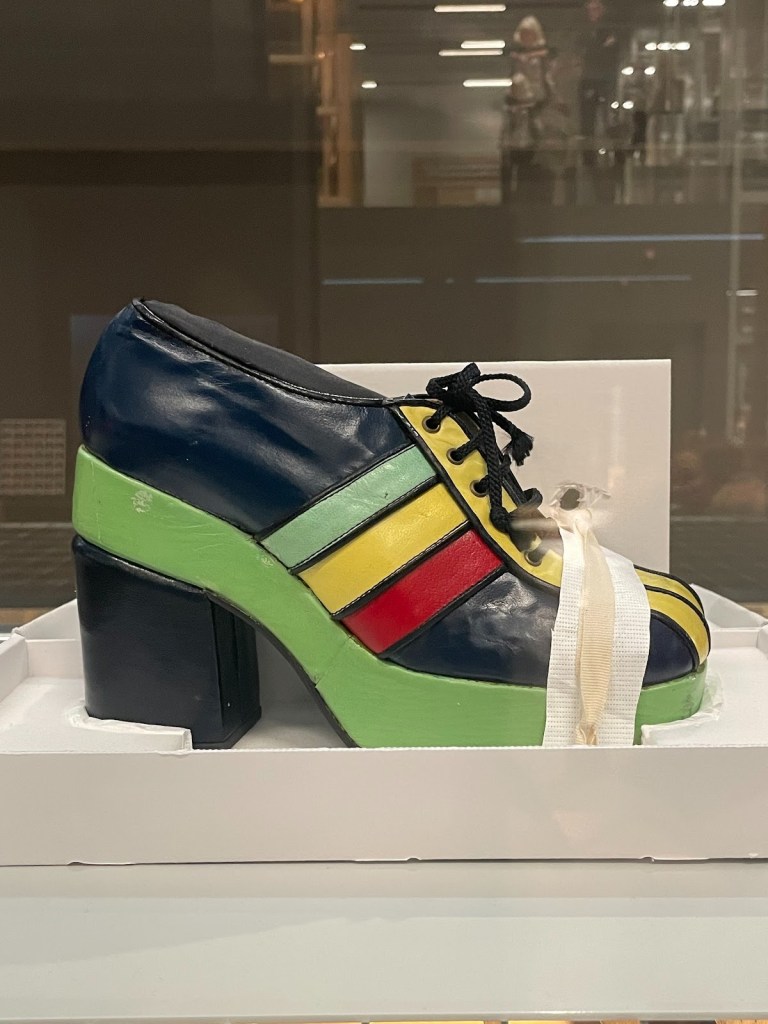
Image Credit: Josie Barry
After the initial frenzy on opening, when timed tickets were required, you can now rock up without a booking and entry is free, however queues are expected at peak times. Bookings to see 3D items from the David Bowie archive, including costumes, musical instruments, models, props and scenery, can be made through the V&A’s seven-day-a-week Order an Object service Visitors can book up to five items per visit at a time that suits them.
The David Bowie Centre at The V&A East Storehouse.
Parkes Street, Queen Elizabeth Olympic Park, Hackney Wick, London, E20 3AX
Opening Times: Daily 10am-6pm. Thursday and Saturday 10am -10pm.




Leave a comment