

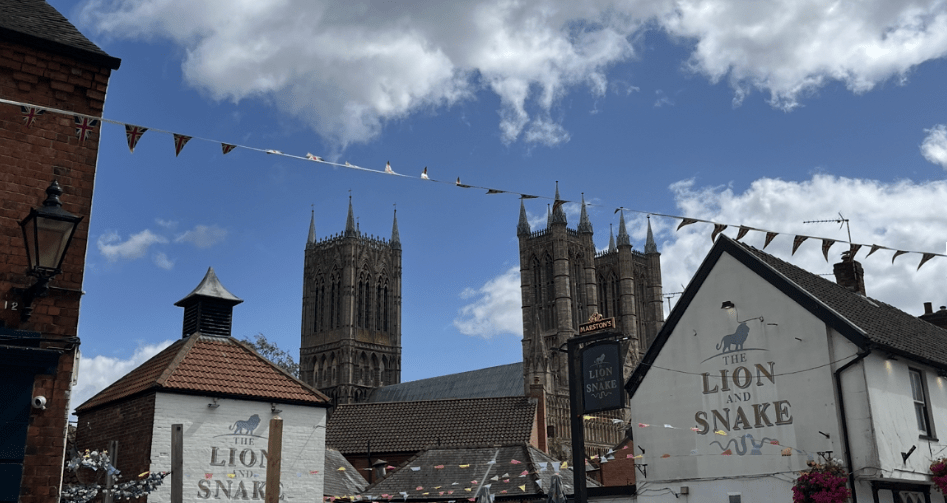
Image Credit: Emma Bassett
The pub has always been a quintessential part of British life. Romantic poet William Blake (1757–1827) nicely sums up its energy: “A good local pub has much in common with a church, except the pub is warmer, and there’s more conversation.” Centuries later, I echo his comments about this establishment’s comforting nature. As a Brit myself, I’ve had my fair share of trips down to the local pub – whether that was as a child to enjoy a Sunday roast surrounded by family, or as a young adult to meet my friends for a few drinks after work. The pub holds many fond memories with loved ones, past and present, as I’m sure it does for others.
The Pub as a Third Place
However, the true power of the pub lies in its role as a third place, a term coined by sociologist Ray Oldenburg in his book The Great Good Place (1989). A ‘third place’ is a public space that facilitates socialisation with others, away from home (first place) and work (second place). Pubs certainly fit into this category, acting as centres for the community. I can recall conversations I’ve had with strangers of all ages in pubs, with a few imparting some great life advice! My friend, a bartender, has told me countless stories of her interactions with customers, often involving the usual, five or so suspects. That is the beauty of the pub, it’s a hub for connection. Even if you stop by the pub alone, you can be sure that at least one person will provide friendly company, whether that be a member of staff or another fellow customer. By your third visit, someone may even greet you by name. The pub keeps loneliness at bay.
The Decline of the British Pub
One is never too far from a pub, or, perhaps, one was never too far from a pub. This haven of community has been steadily declining in number every year. According to Statista, there were 45,000 pubs in the UK in 2024, down from 45,350 the previous year. To provide a clearer picture, over a quarter of British pubs have closed since the turn of the century. This trajectory is set to continue as the British Beer and Pub Association estimates 378 pubs will close this year. With the worsening cost of living crisis, the price of food and alcohol is ever increasing. Many can no longer afford to pop down to the pub, and so it can no longer afford to stay open. This will have a devastating impact on local communities, both economically and, more significantly, socially. The loss of this meeting place may lead to increased isolation, especially for those who rely on the pub for social interaction.
The Political Impact
A recent report from the Institute for Public Policy Research (IPPR), compiled by Dr Sacha Hilhorst, paints a stark picture of the future with the ongoing decrease in public spaces, such as pubs. Hilhorst believes that: “In the absence of shared spaces, misinformation and hate can fill the void.” Pubs can allow for individuals from different backgrounds and with varying political views to interconnect, promoting understanding and empathy among them. Without this vital third place, in combination with the decline of other popular third places, online communities have become more prominent. The IPPR believe that the rise of digital spaces resulting from increased isolation has left many open to far-right influences. The evident growth in anti-immigration activity certainly follows this theory.
To return to Oldenburg’s work on third places, a sequel is set to be released later this year. Karen Christensen and Oldenburg have co-authored The Great Good Place: Havens and Hangouts at the Heart of the Community, which further explores the impact that third places have on loneliness and political radicalisation. Clearly, third places are immensely important to maintain unity. This is why we need pubs now more than ever.
The Fight for Our Pubs
All hope is not lost, however, for local communities are fighting to keep their pubs alive. A BBC article reports that, due to community fundraising, The New Clarence pub in Hull will reopen two years after it closed its doors. Even the remotest pub in mainland Britain has a similar story; the locals of The Old Forge in Inverie, Scotland fought for community ownership, which they achieved in 2022. These are just two examples that demonstrate the people’s desire for our cherished pubs to remain open, and how we can all make a difference. We need these warm third places to converse with friends, family and strangers, just as in Blake’s day. We need our community centres to prevent loneliness. We need these public spaces to stave off division. So, pub?


Leave a Reply