

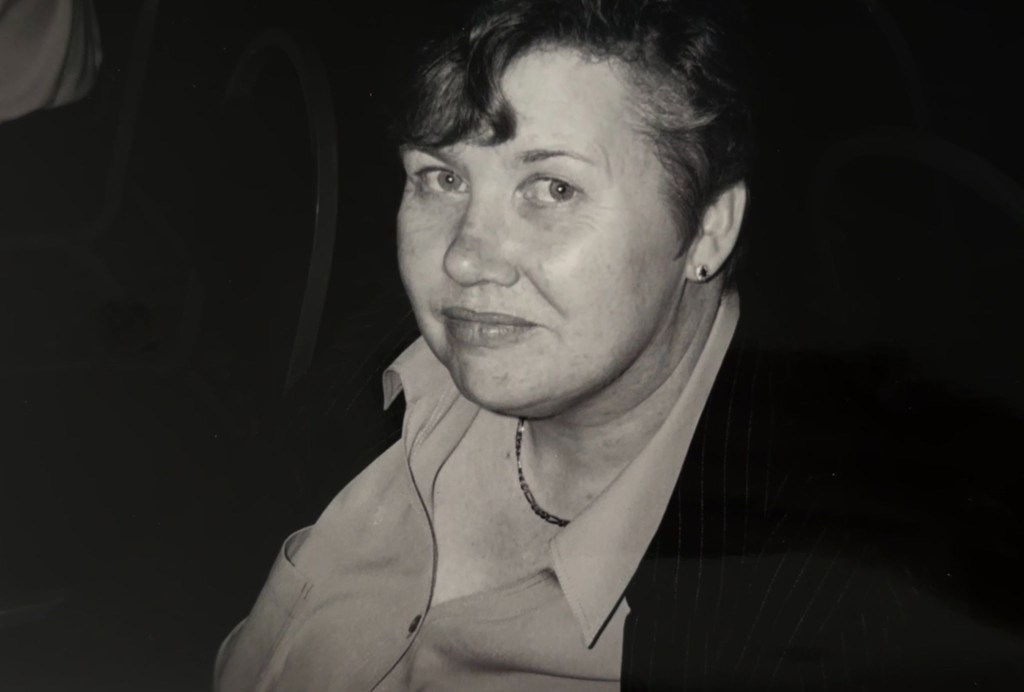
Image Credit: Susan Barnes
“Hello, my darling Eve”, is always the first thing my grandma says to me, always with the same cadence and the same warmth. It makes me feel simultaneously six years old again and completely myself. I wanted to sit down with my grandma, or Nana Val as I call her, and ask her about her life. I didn’t want it to be formal, with a list of never-ending questions, but rather in the way you do when you suddenly realise how much wisdom sits in the minds and lives of the people you love most.
So, this is for my Nana: in the hope that writing about one simple conversation with her shows her just how much of what she’s taught me, and who she is, is what I hope to carry into my own future.
We didn’t plan anything fancy. I made us a cup of tea, and she settled into her armchair, the house smelling faintly of washing powder and Nan’s freshly made banana bread, and we sat down to talk. My nan is 78, which means she’s lived long enough for the world to shift dramatically around her, socially, culturally, and politically. But this hasn’t stopped her; rather, she’s discovered her own way of navigating it all.
Books and Films
Firstly, we started with books and films because that’s the easiest way to get her talking. She didn’t even pause to think; she went straight into her top five: Little Women, Jane Eyre, Black Beauty, The Colour Purple, and anything by Lucinda Riley. She said, “If the film comes on of Little Women, I can watch it again and again… you notice different things”. There’s something I think is quite telling about those choices: all of them are about endurance, injustice, resilience, and women finding their way in worlds that were never designed for them.
Then she got onto Seven Brides for Seven Brothers, which she insists on watching every Christmas. She made me watch it this year (my nan comes and stays at my parents’ house over the winter period) even though I’d always thought the premise was insane — seven ginger lumberjack brothers kidnapping seven women and expecting them to marry them. She laughed when I admitted I actually liked it by the end (they’re all hot, ginger, mountain-living lumberjacks so…).
At one point she suddenly started telling me about Carousel, completely out of nowhere; I think she had been waiting a while for someone to talk to about it. If you’ve never seen it, Carousel is one of those old Rodgers and Hammerstein musicals where everything is dramatic and slightly ridiculous: a moody carnival worker called Billy Bigelow, a fishing town, a tragic love story, and then, because why not, he dies and comes back as a ghost to try and fix everything he messed up.
My nan explained the whole plot from memory, seemingly baffled by his choices once he’d come back as a ghost, so obviously I asked, “Would you ever come back as a ghost to guide your family like Billy Bigelow?”
She didn’t even blink. “I hope not”, she said. “What would they want me around for? I’d probably drive them mad.”
I told her that that wasn’t true and that if I ever needed advice about something important, she’s the first person I’d go to. She gave me that look she does when she’s pretending not to be touched, and said she tries not to influence people too much, that listening is more important than giving answers.
Only my nan could go from a 1940s musical to ghost‑parenting to life advice in about thirty seconds.
Work and People
When the conversation drifted to her working life, she straightened slightly. I got her talking about her job in the probation service, something my nan is very proud of. When I asked her how she felt working with people who had often broken the law, in every possible way, she said, “You treat people the same… at the end of the day, they are people.”
She told me how, in her experience, most people, if you let them talk long enough, figure out their own problems. “Nine times out of ten”, she said, “people come to their own decisions”. She’s always been someone who listens first, advises second.
She told stories, some funny, some grim, some just very human. The aggressive young man who blocked the reception hatch with his legs so no one could get past. The polite yet tough- looking offender who walked in, looked him up and down, and made him move without saying a word. The probation officer who had to deal with a man exposing himself and could only say, flustered, “It’s a good job there was a lot of shirt!”
Listening to her, I realised how much of her worldview comes from seeing people at their worst and still choosing fairness. My nan has always been someone who gives people more than one chance (more than two, honestly) and that’s something I’ve often struggled to understand. But hearing her talk about the people she met, the lives they’d had, the lack of guidance they grew up with, it made more sense. She sees the person first, their mistake second.
Family, Marriage, and Changing Roles
As we drifted into talking about her childhood, she shook her head slightly, the way she does when remembering something both ridiculous and true. “It was different then”, she said. Men worked. Women worked. And then women came home and worked again. Her dad refused to hang washing outside because he didn’t want other men to see him “peg out the smalls”. It was funny, but also sad. A reminder of how fragile masculinity used to be, and how much pressure everyone was under to perform their role.
Then she told me about how her parents met during the Second World War; her dad serving as a soldier, her mum working long shifts in a munitions factory. They met through letters. Proper pen pals. Two young people writing to each other across borders and through wartime, getting to know one another slowly the way people did back then.
She didn’t tell me the romantic details, but she didn’t need to. You can hear the shape of their relationship in everything she says about them: strict, hardworking, determined to give their children more than they’d ever had. She said there were kids in her village who had never even seen the sea, but her parents made sure she did every single year. That tells you everything about who they were.
And listening to her talk about those childhood trips made me think of the ones she took me on. We used to drive to Criccieth in Wales: down long, winding roads and stop by the river on the way, a secret place I only know exists because someone I love has been stopping there for decades. We’d skim stones across the water, trying to get them to bounce more times than the last, and eat bacon and egg sandwiches that always tasted better cooked on her small gas stove.
When we finally reached the beach, the water was so clear it looked almost unreal, the kind of blue that only happens when the sky matches the sea. We’d run straight in, shoes off, trousers rolled up, convinced we could handle the cold. And every single time, without fail, we’d get proper clotted‑cream ice cream – my grandad’s favourite. It’s the kind that melts faster than you can eat it, dripping down your fingers while you try to keep up.
Ageing and Time
My nan has never pretended ageing is glamorous. When I asked her what the best thing about getting older was, she simply said, “nothing”. Completely deadpan. Then she softened, her voice going gentle in that way it does when she’s telling the truth, and said, “Having my family around me is the best thing I can ever think of.”
She talked about the years she spent caring for my granddad, nearly twenty, and how they lost time they should’ve had together. Holidays they never took, things they couldn’t do, places they never saw. She said if your health isn’t good, “it can become very depressing”.
But then she said the thing that stuck with me: “If you get an opportunity to go and do something and you really want to do it, find a way to do it. Go and do it. You’ve only got one life”.
She was talking about time, how quickly it disappears and how easy it is to think you’ll have endless chances, and hearing her say that has always made me want to stop holding back and actually go for what I want. I’ve always held onto that; whenever I start pulling away from something I want, she’s the one who nudges me forward.
And then, in true Nan fashion, she switched gears completely and said she hopes she’ll be well enough to fly to Canada next year to visit me, “if I could manage it… if I could keep going that far”, ever the optimist.
What I Took from it
Talking to her made me realise how much of my life has been shaped by hers. Not in obvious ways, but in the small things: how I think about fairness, how I listen, how I work, and how I treat people.
It wasn’t a conversation about “the past”, but rather a reminder of what actually matters, and how much wisdom sits quietly in the people we love. Just talking to her made me realise how much of my life has been shaped by hers. Often something you only notice when you’re old enough to understand what it took for them to live the lives they did.
My nan grew up in a world where women worked full days and then came home to work full nights. Where her mother worked in a factory during the war, whilst her husband was at war, and still managed to raise children with a kind of steadiness that feels impossible now. Where her own marriage was a partnership because it had to be, not because anyone taught men how to share the load.
And I realised, sitting there with my tea going cold, that I stand on the shoulders of women who didn’t have the luxury of naming their strength. Women who simply got on with it. Women who worked, who cared, who endured, who hoped. Women who made sure their daughters saw the sea, even when money was tight, and women who believed in opportunity without ever having much of it themselves.
One of those women is my nan.
We didn’t have a conversation about “the past”. But rather it was a reminder that everything I am — my politics, my principles, my sense of fairness, my belief in living a good life — comes from the women who came before me.
And I think that’s what I’ll carry forward: the knowledge that my life is built on theirs. That I’m part of a line of women who kept going, kept caring, kept choosing kindness, kept choosing courage.
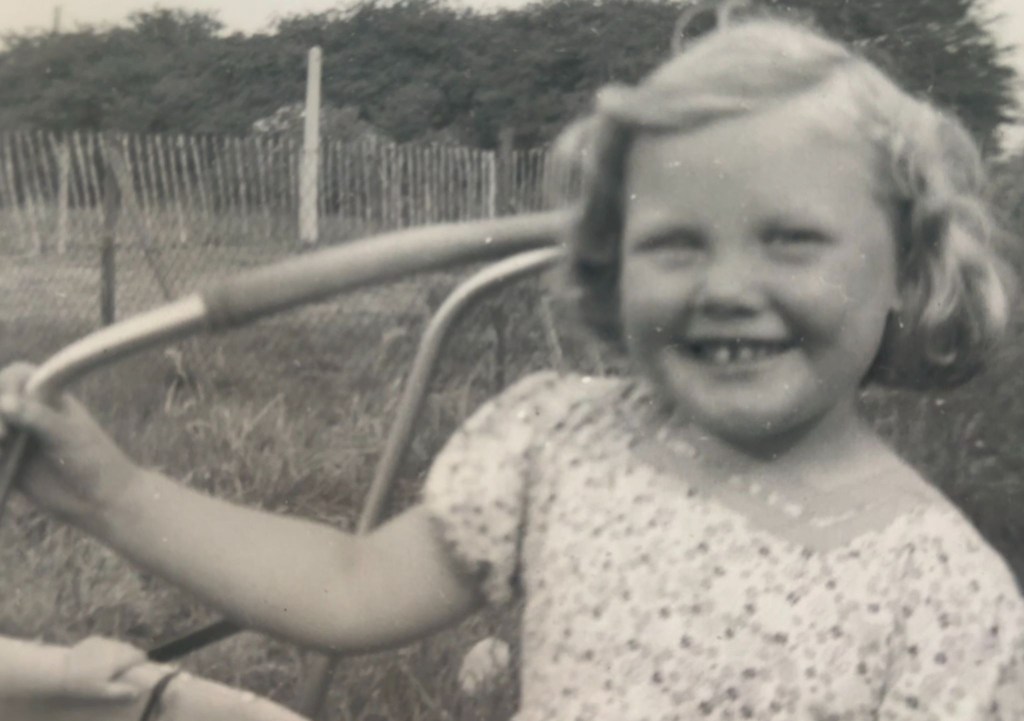
Image Credit: Evelyn Barnes, My Nan, age four




Leave a Reply