


Image Credit: Mission Gastro Hospital
One day in June 2024, I went for a walk. I packed myself some lunch, a cup of tea and a cheese sandwich, and set up camp at the top of the hill. When I took a bite, though, it felt wrong. The bread sat in my throat like a rock, would not budge, and eventually came back up.
By September, this was normal. Every meal was a bust – just an invitation to discomfort and pain. Dining out was even worse. It became a ritual of mine, when I entered a restaurant, to scout out the toilets and find a seat nearby, ready for my inevitable sprint from table to basin. The sprint would normally be followed by chest pain, a heaviness and sharpness like nothing I’d felt before.
For a while I told no one. I held it to my chest like a hand of cards, but that couldn’t last forever.
First, I tried the local pharmacy. I explained as best I could – my throat is blocked, my chest hurts like hell, my head is spinning – and was told I had acid reflux. This didn’t sit right with me: I’d had reflux before, and this was different, but I bought the overpriced pills anyway. Weeks later, when nothing had changed, I finally found the courage to book a doctor’s appointment. Unfortunately, misdiagnosis was to become a trend, and I was simply given more antacids for my troubles.
Months passed. I spent hundreds of pounds on useless medication, lost weight and hair in equal measure, and woke up every day more tired than the night before. By June 2025, I was surviving on porridge and soup – even that, I couldn’t always swallow.
Over summer, on a particularly bad day, I took myself to A&E. After the usual deadening wait, I had my bloods taken (normal, if a little anaemic), my body weighed (healthy, if on the lighter side), and my mind quizzed. The last part was the worst: the doctor was convinced I’d been making myself sick, if not intentionally then subconsciously. This latter suggestion freaked me out, sent me down many internet rabbitholes, and had me afraid that, somehow, I was making this all up.
That doctor, albeit reluctantly, recommended an endoscopy. Ineligible for an emergency referral, I was told the wait would be about eight weeks but was lucky enough to be taken in after five. Although the endoscopy itself was horrible, it did seem to get things moving.
In August, after a few more tests, I was diagnosed with achalasia. To put it simply, the muscles in my oesophagus had stopped working and were refusing to let any food into my stomach. The chest pains were explained, too: they were muscle spasms caused by this breakdown. And so there came another waitlist, this time for an operation, for which there was no defined endpoint. Those next few months were the hardest and, relying on Ensure and Huel for sustenance, I became a shell of myself.
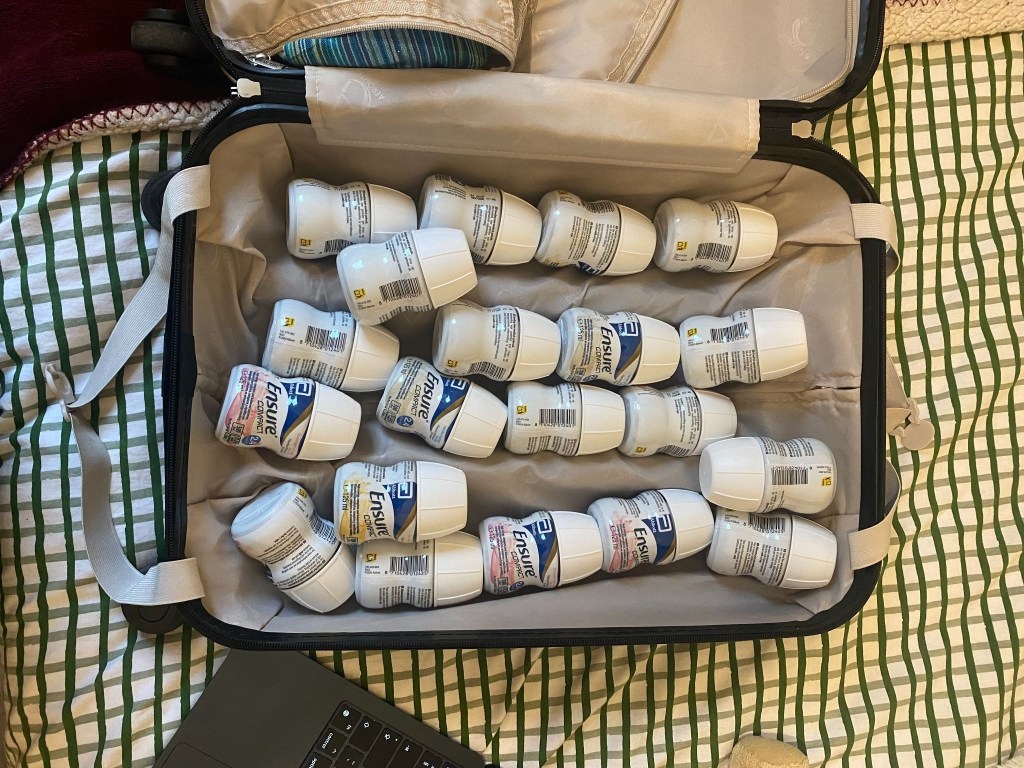
My suitcase for a trip home, full of the essentials
But soon it was November, and I was sitting in the library when my phone rang; the surgery would take place in two weeks.
It is now June 2026, two years since my first brush with achalasia symptoms, and everything is different. The surgery was lonely and the recovery painful, but it provided me with a real sense of freedom surrounding food. Seven months on, and I can eat normally. And, excepting the occasional discomfort of a generous mouthful, I am no longer in pain. The chest spasms still resound, but are generally calmed by a glass of water and some deep breaths.
Regardless of my remaining symptoms, I could not be more grateful to the doctor who finally heard me, nor to the surgeon who so carefully treated me. Without them, I have no idea where I’d be.
If you’d like to read more, please visit Achalasia Action. This illness affects just 1 in one hundred thousand people and is largely underrepresented in the media, which likely plays a role in the constant misdiagnosis faced by myself and many others.


Leave a Reply